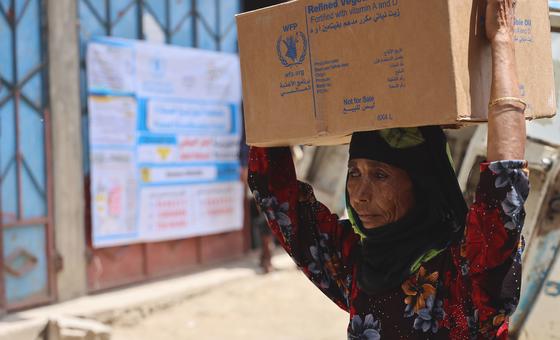
The United Nations announced on Tuesday that more than 250,000 people have been displaced by renewed fighting in Yemen, with the southwestern city of Taiz identified as a primary area of concern. According to UN News, the conflict has resumed following the end of a relative calm established by a 2022 truce, leading to significant civilian displacement and resource shortages. The UN Human Rights Office counted 32 confirmed civilian deaths in the Taiz governorate, including 14 children and nine women, as combat zones expand toward crowded residential neighborhoods.
Volker Türk, the UN human rights chief, stated that the closure of the main corridor connecting Taiz to Aden is jeopardizing civilian safety. He urged Houthi fighters to allow aid into the encircled city. Akhil Iyer, the UNICEF Representative in Yemen, emphasized that Taiz is the top priority, noting that many displaced families are arriving in overcrowded camps with minimal resources. He reported that clean water is scarce for those who have fled with little more than the clothes on their backs.
Food security in the region is deteriorating rapidly. The UN World Food Programme found that wheat reserves in affected parts of Taiz are running low. Iyer highlighted that 10 out of 16 districts in the governorate are already classified at emergency levels of food insecurity. Sanitation services have also stalled, with waste accumulating in the city as diesel fuel, essential for water pumps, becomes scarce due to blocked supply lines.
The health sector faces an acute emergency, with the World Health Organization reporting that 12 hospitals in Taiz have approximately four days of fuel remaining. Tarik Jasarevic, the WHO spokesperson, indicated that oxygen cylinders are in daily deficit and that 115 of 127 essential medicines have stocks sufficient for only one week or less. Meanwhile, UNHCR spokesperson Matthew Saltmarsh noted that access problems are preventing aid teams from reaching the most vulnerable, including 65,000 refugees and asylum-seekers, most of whom are from Somalia and Ethiopia.