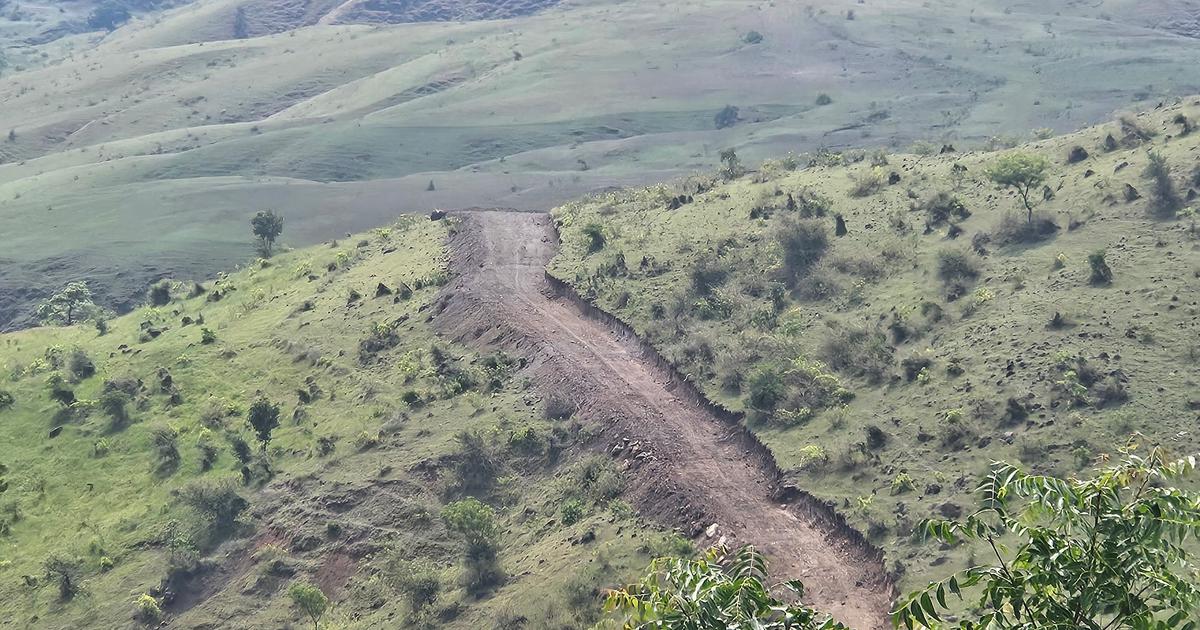
Scroll’s investigation into Maharashtra’s Beed district reveals significant irregularities in the implementation of the Viksit Bharat-Guarantee for Rozgar and Ajeevika Mission (Gramin) scheme. Despite official data showing 40,267 workers from Beed marked present on October 4, ground-level reporting indicates that many of these individuals were absent from their assigned work sites. The district, which suffered a 37% monsoon rainfall deficit, is experiencing a severe drought that has compounded the failure of the employment guarantee program.
The new scheme, which replaced the Mahatma Gandhi National Rural Employment Guarantee Act in July 2025, relies on digital monitoring through the National Mobile Monitoring Service App. This system is designed to capture geo-tagged, time-stamped attendance to ensure workers are physically present. However, Scroll found that in five inspected sites, 47 labourers were marked as working between 8:55 am and 9:30 am, yet none were on site during those hours. In many cases, the live photo used for attendance was simply a reused image from the worker’s initial digital verification, or eKYC, process.
Local officials and workers describe a system where gram panchayat members and local leaders are siphoning wages. Jithin Rehman, a senior official at the Beed Zilla Parishad, stated that 23,000 entries were rejected in the last four months due to discrepancies. A whistleblower’s email to district authorities alleged that fake GPS applications were being used to mark attendance fraudulently. In several villages, families listed on the muster rolls claimed they were unaware of their enrollment, with some noting that money was deposited into their accounts and then withdrawn by local leaders.
The Ministry of Rural Development responded to Scroll’s queries by citing the use of artificial intelligence to detect duplicates and conducting field inspections. However, the ministry did not specifically address the vulnerabilities in the app that allowed the Beed irregularities to persist. As the drought deepens, the gap between official statistics and on-ground reality is forcing more residents to migrate. Satish Shirsath, a local farmer, noted that he and his wife left for Sangli to cut sugarcane, hoping to earn Rs 800 a day, as the local scheme failed to provide consistent work.