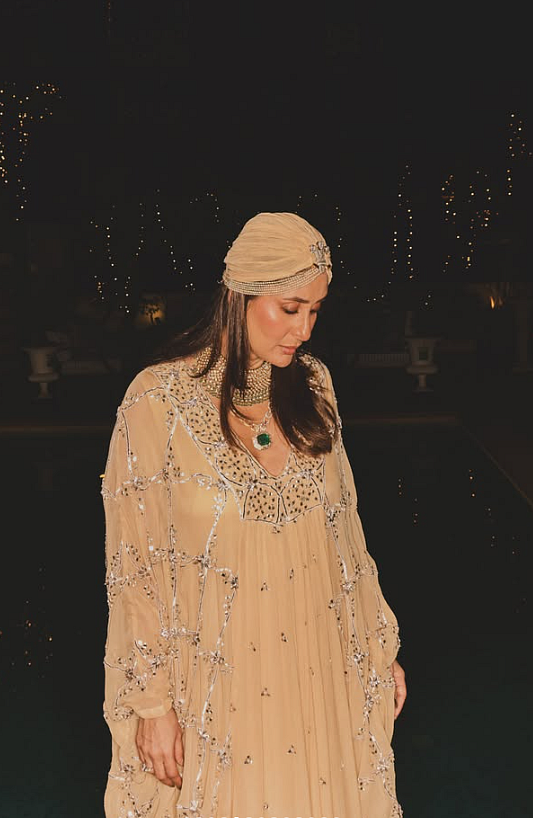
Bollywood actress Kareena Kapoor Khan faces a legal dispute following her Diwali 2026 social media appearance, which featured a 30-carat emerald pendant from the Bhopal royal family. According to Khaleej Times, the controversy centers on the inclusion of the Quranic verse Ayat-ul-Kursi carved into the historic jewelry. Abbas Hafeez, a spokesperson for the Indian National Congress, has served a legal notice demanding the removal of the photographs and a public apology. Hafeez stated that the objection was directed specifically at the religious inscription rather than the actress's choice of attire or festival celebration. He emphasized that the pendant was an expression of Islamic faith commissioned by the Begums of Bhopal and should not be treated as a fashion accessory. Advocate Mohammad Zafar, representing Hafeez, confirmed that the notice seeks the immediate deletion of the posts, warning that further legal action could be pursued if the demands are not met. Zafar argued that the presentation of such a sacred verse on social media had hurt the sentiments of the Muslim community.
In response to the backlash, the Hindu Utsav Samiti has publicly defended the actress. Chandrashekhar Tiwari, the organization's president, rejected the call for an apology, asserting that Kapoor Khan had the right to celebrate Diwali and wear religious symbols. Tiwari drew a parallel to his own practice of wearing a pendant featuring Goddess Bhagwati, arguing that displaying religious icons close to the heart should not invite criticism. The actress’s sister, Rhea Kapoor, had previously clarified the origin of the items in a social media caption, describing them as genuine heirlooms from Saif Ali Khan’s family. The jewelry traces back to Sajida Sultan, the daughter of the last ruling Nawab of Bhopal, and includes a 200-year-old kalgi. The incident has ignited a broader debate regarding the intersection of heritage, religious symbolism, and modern fashion in public discourse.
The dispute highlights the sensitivity surrounding the use of religious texts in contemporary media. While Hafeez maintained that people are free to wear any clothes or celebrate any festival, he insisted that the specific context of flaunting a holy verse on a festive post crossed a line. The legal notice does not challenge the ownership of the heirlooms but focuses on the manner of their digital presentation. As the actress faces potential legal remedies, the case underscores the complex dynamics of cultural heritage in the digital age.