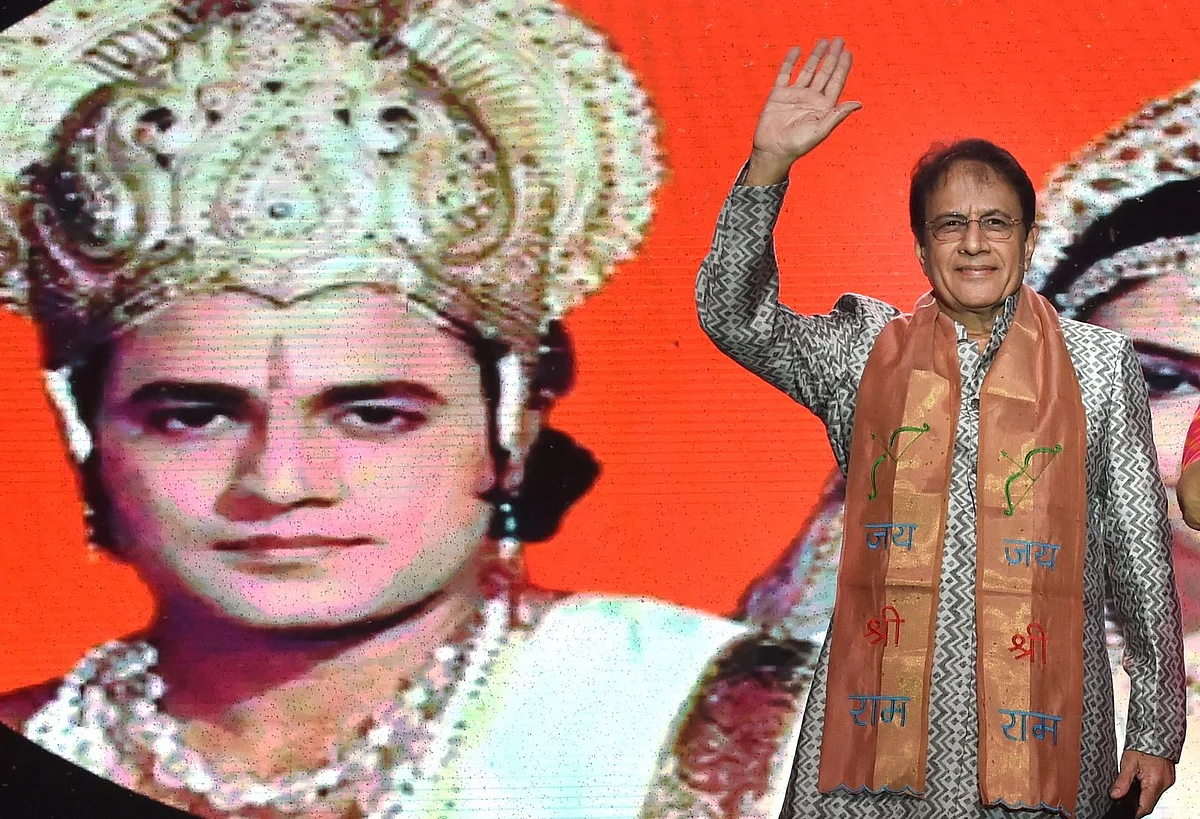
Arun Govil, widely recognized for his portrayal of Lord Ram in the 1987 television series Ramayan, has revealed that it took nearly three months of persistent persuasion before he agreed to play King Dashrath in Nitesh Tiwari’s upcoming film Ramayana. Speaking to Variety India, the actor explained that his initial reaction to the offer was one of firm reluctance rather than enthusiasm about returning to the mythological epic in a different capacity. He stated that he did not feel the need to take on the role when it was first presented to him by the filmmakers.
The casting of Govil as the father of Ranbir Kapoor’s Ram represents a full-circle moment for the franchise, yet securing his participation required significant effort from the production house. Govil recounted that the team remained adamant about his involvement, repeatedly emphasizing the necessity of his presence in the film. The persuasion intensified to the point where the producers compared the ease of signing the lead actor, Ranbir Kapoor, or other stars like Yash, against the difficulty of casting the character of Dashrath. This comparison ultimately helped convince Govil to accept the role.
Once he agreed, Govil found it relatively straightforward to inhabit the emotional landscape of King Dashrath. He noted that his long association with the Ramayan narrative meant he already understood the father whose decisions and heartbreak define Ram’s journey. He drew upon his own experience as a parent to a 46-year-old son, stating that paternal emotions came naturally to him. He described Dashrath as a king who must maintain decorum even while his heart is breaking, particularly when his beloved son is banished.
Govil also reflected on the challenges of reprising iconic roles, recalling his experience in the 1997 film Lav Kush. In that project, he played Lakshman opposite Jeetendra’s Ram, a casting choice he had previously warned the makers might not sit well with audiences accustomed to his television portrayal of Ram. He admitted that the film "didn’t go down well at all" due to viewer resistance. The shift from playing the devoted son to the grieving father in the new film marks a significant departure, one that required both external persuasion and internal reflection to navigate successfully.