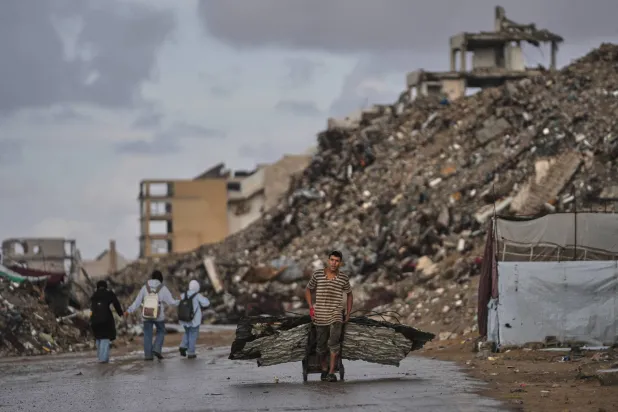
The World Food Programme announced on Monday that it will end monthly food assistance for 500,000 people in the Gaza Strip due to a significant funding shortfall. According to UN News, this reduction brings the total number of recipients down from 1.6 million in September to 1.1 million, a figure that still represents roughly half of the territory's population. The agency stated that these cuts are necessary to sustain operations as winter approaches, despite ongoing acute needs in the war-battered enclave.
Reuters reported that the agency is not only reducing the number of people served but also shrinking the volume of aid. Food rations have been halved, meaning families will receive one parcel instead of two, along with a smaller bag of wheat flour. Additionally, the value of cash assistance for 75,000 families has been reduced, and the number of daily hot meals has dropped from 250,000 to 150,000. Al-Monitor noted that families in hard-to-reach areas near the Israeli military control line will now receive a hot meal every other day rather than daily.
Carl Skau, the acting head of the WFP, told Reuters that the cuts are occurring just as the territory faces its fourth winter. "Well, life is still brutal here," Skau said, adding that there is no proper shelter or basic services. He emphasized that the agency requires $450 million in the coming half-year to keep critical operations running in Gaza and the West Bank. Skau described the current situation as a moment to intensify support to preserve the progress made since the October 2025 ceasefire.
Shaun Hughes, the agency’s local director, explained to AFP that the aid has been a vital lifeline, yet financial constraints are forcing a scale-back. He noted that approximately 1.4 million residents, equating to two-thirds of the population, remain in acute food insecurity. Khaleej Times reported that while the UN’s food security classification had identified famine conditions in August last year, Israel described that finding as a lie. The agency warned that improved humanitarian access since the ceasefire has lessened hunger, though these improvements remain fragile if funding continues to decline.