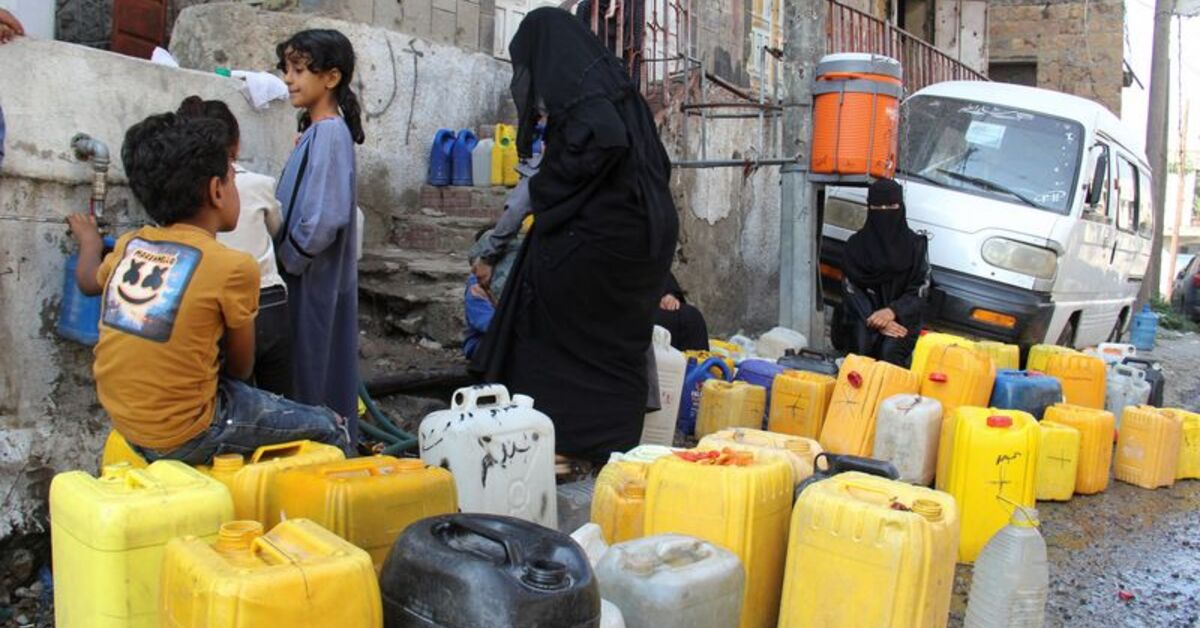
Families in Taiz, Yemen’s third-largest city, are now rationing drinking water after renewed clashes between the Saudi-backed government and Houthi forces disrupted fuel supplies. Al-Monitor reported that aid groups and UN agencies identified these disruptions as affecting water systems that serve three million people. The fighting, which began in September, blocked critical supply lines, including the route to Aden, leading to acute shortages of fuel, food, and water.
Diesel shortages have stalled pumping stations and hospital generators, according to Asharq Al-Awsat. Waste collection has also stalled, leaving trash to accumulate along major roads. Sanitation workers, unable to reach the main dumping site due to nearby clashes, now burn waste in the streets. Save the Children noted that water output in the governorate has dropped by roughly half. UNICEF stated that the price of a water tanker load has jumped from 23,000 rials to 70,000 rials, a tripling of costs that strains household budgets.
Health authorities warn that the growing piles of trash are breeding grounds for illness. Abdulrahman al-Sabri, head of the Taiz Health Office, told Reuters that the waste buildup is causing respiratory issues and other ailments. The World Health Organization reported that cholera cases have tripled since early September, reaching 683 this month. Additionally, 12 hospitals are operating with fuel reserves that will last only about four days, while medicine stocks dwindle.
Children face the most severe risks, with Save the Children describing their situation as extremely dangerous due to limited access to basic needs. UNICEF identified 52,000 acutely malnourished children in Taiz this year, noting that road closures have stopped deliveries of therapeutic food. The Taiz governorate now shelters nearly half of the 250,000 people displaced by the recent escalation. The Danish Refugee Council warned that poor sanitation could impact neighboring governorates, including Lahj, Abyan, and Aden, where displacement sites are already crowded and resources are stretched thin.