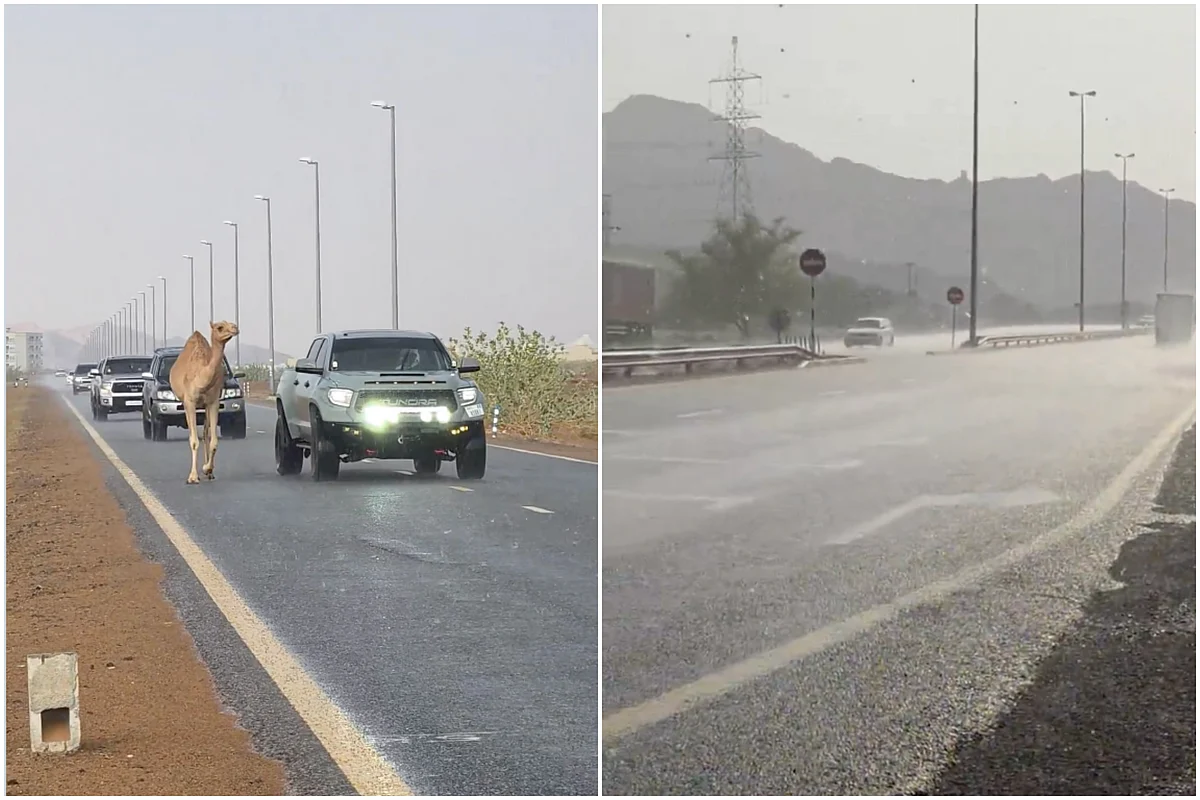
Rain and hail affected parts of the United Arab Emirates on Monday, October 19, according to Khaleej Times. The weather event brought a noticeable change to conditions in the northern emirates, with specific precipitation recorded in Fujairah and Sharjah. Videos shared by the Storm Centre captured the intensity of the showers, showing hail falling in the Murbaḍ and Masafi areas of Fujairah. In Sharjah, precipitation reached the Al Madam and Margham districts, where dark grey clouds gathered overhead. One notable scene from Sharjah featured a camel walking along a rain-soaked road, navigating the wet conditions alongside motorists.
The National Centre of Meteorology (NCM) had earlier forecast rain for several areas of the country on Monday, anticipating changing weather conditions. The centre’s broader climate outlook indicates that the UAE may experience above-average rainfall in the coming months. This projection is tied to the El Niño climate phenomenon, which is expected to persist into early 2027. The latest outlook suggests a 96 per cent probability that El Niño conditions will continue through March 2027, potentially causing temperatures and rainfall to exceed regional averages.
According to Khaleej Times, the phenomenon is projected to reach its peak intensity between October and November 2026. The Niño 3.4 index is expected to hit roughly +3°C, signifying a very strong event. However, the NCM notes that El Niño does not automatically guarantee extreme rainfall, storms, or flooding in the UAE. Its effects vary by region and season, depending on local weather systems. The centre has dismissed viral social media claims that link El Niño directly to severe flooding, urging residents to rely on official forecasts.
Earlier this year, NCM meteorologist Ahmed Habib explained to Khaleej Times that El Niño’s impact on the UAE would likely intensify during the autumn months. He noted that the effect would be most pronounced in October and November. Habib clarified that during the summer season, the phenomenon’s influence is more significant in East Asia compared to West Asia. He further stated that the phenomenon might boost moisture levels over the UAE, thereby increasing the likelihood of rainfall based on local atmospheric conditions.