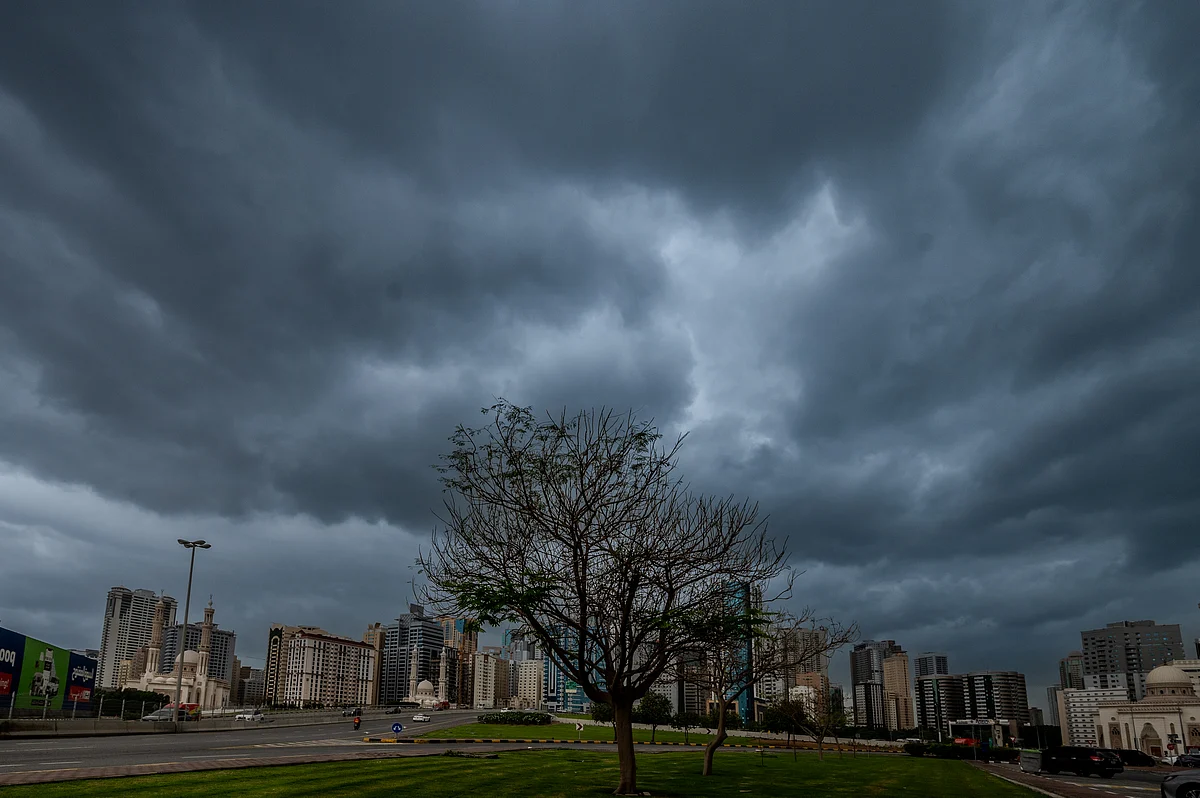
The United Arab Emirates faced a series of weather disruptions in late October and early November 2026, characterized by convective rainfall and dense fog. According to Khaleej Times, the National Centre of Meteorology (NCM) issued forecasts predicting fair to partly cloudy skies interspersed with rain and significant visibility hazards. The weather patterns were attributed to convective cloud formations and the influence of El Nino, which increased the probability of precipitation in the eastern and southern parts of the country.
Rainfall was anticipated across multiple days, beginning with showers expected on Saturday, October 31. Khaleej Times reported that the weather department noted convective cloud formation eastward and northward would drive the rain. Highs reached 35°C in Abu Dhabi and Dubai, while overnight lows settled at 26°C. The following day, Sunday, November 1, saw similar conditions with highs of 37°C in both Abu Dhabi and Dubai, and lows around 25°C. On Monday, November 2, the NCM forecasted showers due to cloud formation eastward and southward, with temperatures rising to 37°C in Abu Dhabi and Sharjah, while Dubai recorded a low of 23°C.
As the week progressed, the weather threat shifted from rain to fog. On Tuesday, November 3, the NCM issued red and yellow alerts for fog in the southern parts of the country, warning of severely reduced visibility. Khaleej Times reported that humidity levels rose overnight, leading to mist formation in coastal and inland areas. Temperatures on this day ranged from 19°C to 39°C nationwide, with Abu Dhabi at 26°C and Dubai at 27°C. Ras Al Khaimah saw temperatures dip to 23°C.
Authorities responded to the hazardous conditions with specific safety directives. Khaleej Times reported that the Abu Dhabi Police urged motorists to pay close attention to changing speed limits displayed on electronic signs along the roads. Wind conditions varied throughout the period, with speeds ranging from 10 km/hr to 55 km/hr, often bringing blowing dust alongside the clouds. The sea remained slight in the Arabian Gulf and the Oman Sea during these events.