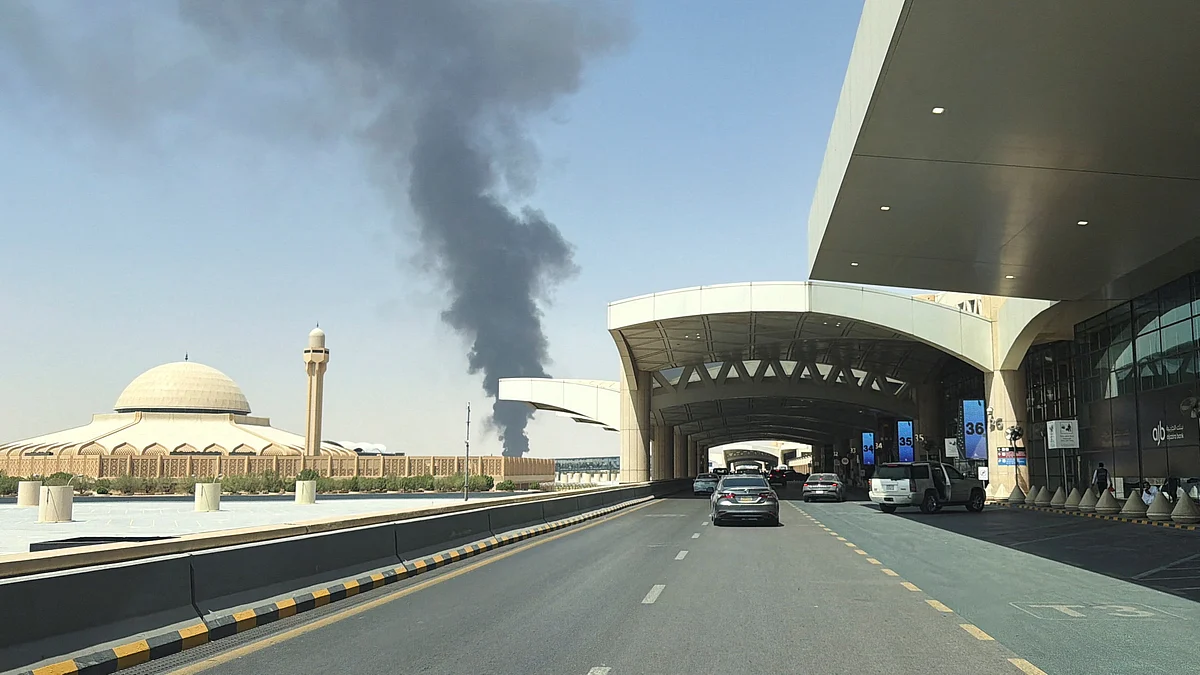
Commercial aviation between the United Arab Emirates and Saudi Arabia faces continued interruptions on Sunday due to persistent Houthi strikes against civilian targets in the Kingdom. Khaleej Times reports that these security concerns have compelled multiple carriers to prolong their flight suspensions to major Saudi cities, particularly Riyadh and Dammam. The ongoing instability is reshaping travel options across the Gulf region.
Etihad Airways has grounded all passenger and cargo operations linking Abu Dhabi with Riyadh and Dammam until the end of the month. The carrier attributes these cancellations to the volatile regional environment. However, the airline clarified that routes connecting Abu Dhabi to other Saudi destinations remain active, allowing passengers to reach parts of the Kingdom without interruption. This selective approach aims to balance safety concerns with network connectivity.
Air India and its low-cost subsidiary, Air India Express, have similarly extended their halt on services to and from Jeddah through November 24. Connections to Riyadh and Dammam are also suspended until November 30. The alignment of these suspensions across different carriers suggests a coordinated response to the perceived risk levels in these specific urban centers.
At Dubai International Airport, operational disruptions were evident in real-time schedules. Flynas canceled flights XY 212 and XY 210 to Riyadh, as well as their return counterparts XY 211 and XY 209. A Flynas service from Dammam experienced a 37-minute delay. Flydubai also reported delays, with flight FZ 910 from Jeddah delayed by 31 minutes and FZ 8388 from Medina delayed by 40 minutes. These changes reflect the immediate pressure on airport authorities to manage passenger flow and safety protocols.
Beyond Saudi routes, numerous international services at Dubai International Airport were affected. Flydubai flight FZ 144 from Amman was cancelled, and Ariana Afghan Airlines flight FG 403 from Kandahar was also cancelled. Numerous other flights from destinations including Dhaka, Kabul, Bangkok, and New York faced delays ranging from 30 minutes to over two hours. In Abu Dhabi, Air Arabia flight 3L044 from Kathmandu was delayed by 30 minutes, and Etihad flight EY 854 from St Petersburg was delayed by an hour and 30 minutes. The widespread nature of these delays suggests a broader operational strain on the region's aviation hubs.