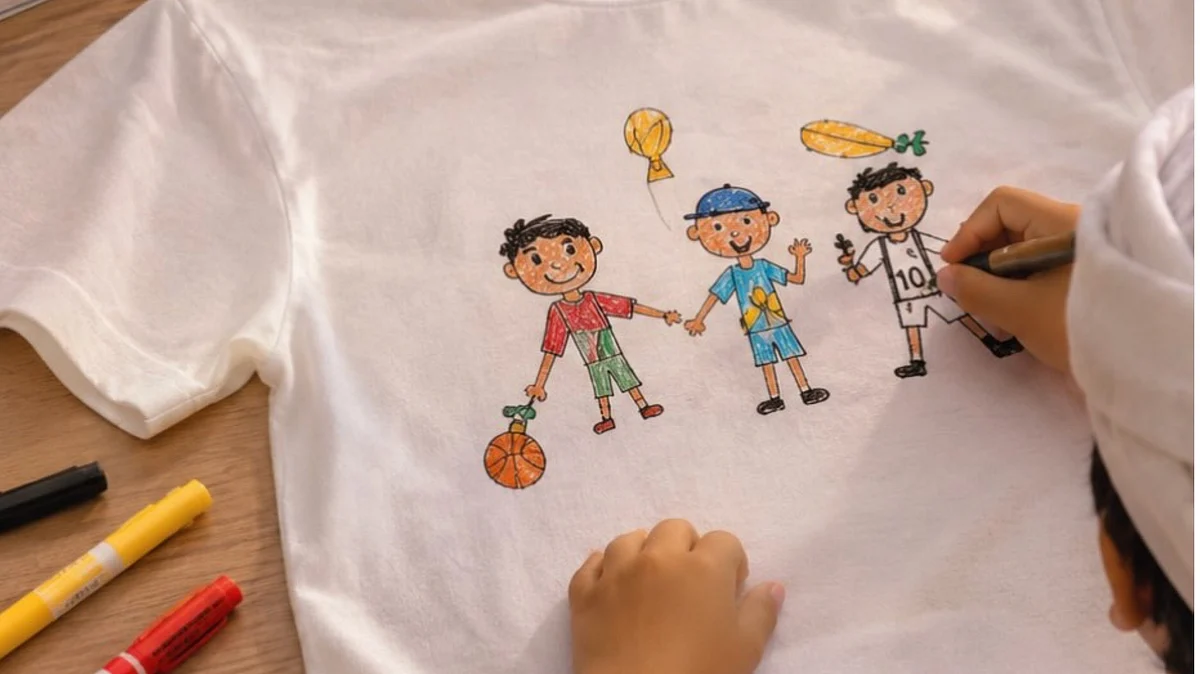
Alyazia Khoori, a mother based in the United Arab Emirates, has established a small business called Sketch Trio that converts her three children's artwork into T-shirt designs. According to Khaleej Times, the enterprise began when one of her sons regularly surprised her with drawings he had created. One specific piece caught her attention, leading her to have it printed on a T-shirt. When she wore the garment, friends and family inquired about its origin, and upon learning it was a child's design, they requested similar items for themselves. This demand encouraged Khoori to formalize the activity into a commercial venture.
The business features the artwork of Khoori’s two eight-year-old twin sons, Khalid and Abdullah, and her six-year-old son, Mohammed. Khoori noted that not every drawing is selected for production; some designs are inspired by specific family events. For instance, after a relative purchased a Porsche and gave the children a ride, Khalid drew the car, prompting Khoori to create a T-shirt for their aunt. Another design features a horse, created after their aunt Mariam won a horse race. Khoori explained that most of their products have unique stories attached to them, which adds value to the personalized gifts.
Starting the business presented logistical challenges, particularly regarding material quality and reliable printing services. Khoey stated she refused to compromise on quality to reduce costs, ensuring the garments would not deteriorate after a few washes. She also faced difficulties in finding printers who could meet order deadlines. Despite these operational hurdles, Khoori emphasized that the primary goal was not financial profit but rather the development of her children's skills. She credited the support of her family, including her husband, for helping the project grow.
The most significant outcome for Khoori has been the visible growth in her children's confidence. During their first exhibition, she managed all customer interactions and displays. By the second day, she observed her sons approaching visitors to explain their drawings. One particularly shy son began welcoming guests and discussing the designs, a behavior Khoori had not seen before. She noted that the children realized they could create something others genuinely wanted, which boosted their self-esteem. Khoori hopes the project encourages other parents to support their children's interests from a young age, prioritizing communication skills over sales figures.