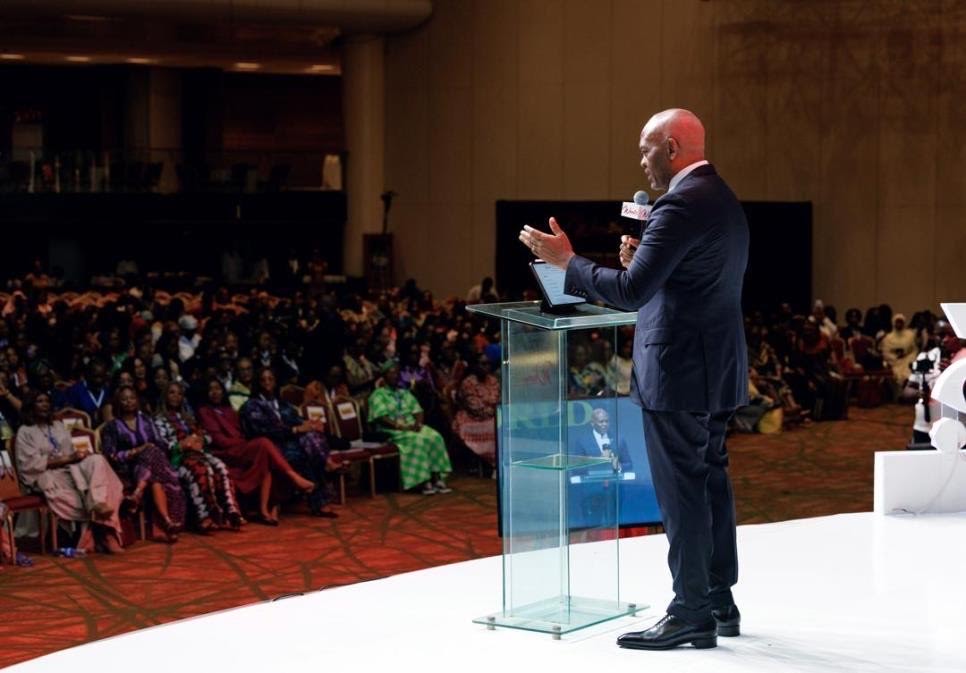
Tony O. Elumelu, Chairman of Heirs Holdings, addressed the 25th annual WIMBIZ gathering in Lagos, Nigeria. Premium Times and Nairametrics noted that Elumelu challenged corporate leaders to demonstrate commitment to gender inclusion through specific appointments and capital access. He presented the Heirs Holdings Group structure as a practical model, noting that eight women hold Chair and CEO positions across the group’s financial, hospitality, and real estate ventures. Elumelu argued that women’s economic leadership is a requirement for competitiveness rather than a concession to fairness, citing the Tony Elumelu Foundation’s deployment of over US$120 million in seed capital to 24,633 entrepreneurs across Africa as evidence of the sector’s potential.
In a parallel development, Women in Management Africa (WIMAFRICA) is holding its first African edition of the Women in Management global economic forum in Lagos. Punch reported that the two-day conference, held from 10 to 11 November 2026, focuses on the theme “The Power Shift: Women Driving Africa’s Global Economic Influence.” Dr Ngozi Oyewole, Chairperson of WIMAFRICA, stated that the organization aims to move women into positions where they influence business decisions and resource allocation. She identified limited access to finance and inadequate infrastructure as major obstacles, urging financial institutions to develop products that reflect the operational needs of women-owned manufacturers and small businesses.
Meanwhile, in Brussels, Thomas Tayebwa, Deputy Speaker of Parliament and President of the Organisation of African, Caribbean and Pacific States (OACPS), called for a more inclusive partnership with the European Union. Nile Post reported that Tayebwa urged both blocs to give young people and marginalized communities a greater role in shaping development priorities. Speaking alongside his EU counterpart, Francisco Assis, Tayebwa emphasized that climate adaptation and critical raw materials directly impact young people who will secure jobs from these sectors. He called for the acceleration of ratification processes for the Samoa Agreement, arguing that resource-producing countries should move beyond exporting unprocessed materials to investing in local industries and processing capacity to ensure fair wealth distribution.