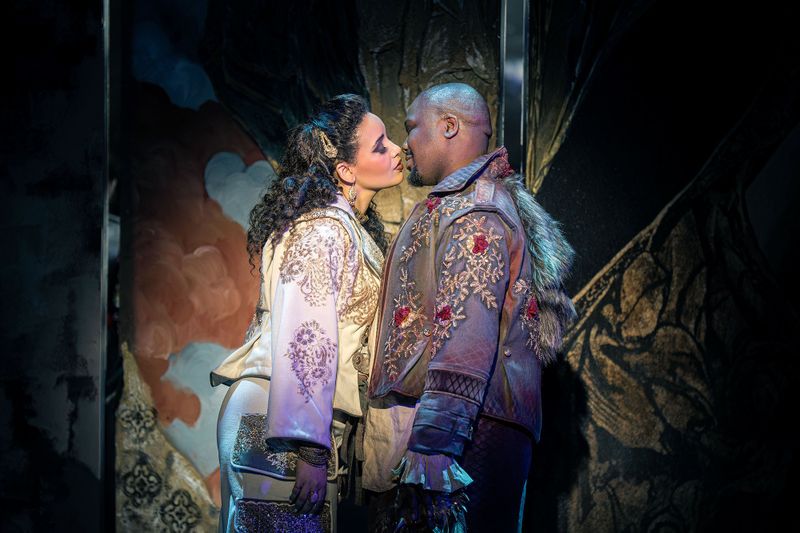
Cape Town Opera is currently staging a new production of Charles Gounod’s Roméo et Juliette at the Artscape Theatre, running through 29 November. According to a review in the Daily Maverick, the company presents a future-facing iteration of the French composer’s 19th-century romantic tragedy. The production utilizes the Cape Town Philharmonic Orchestra under the direction of maestro Kamal Khan to deliver the work’s expansive musical score.
The narrative follows the classic tale of youthful desire and family feud, culminating in a double suicide. The Daily Maverick notes that the scale of the emotions in the performance is off-the-charts grand. Soprano Brittany Smith and tenor Lukhanyo Moyake portray the star-crossed lovers, navigating a vocally demanding show. The review highlights their performance of four major duets, including their initial encounter at a masked ball and a final heartbreaking exchange. Throughout the production, the performers maintain their vocal strength, with the publication noting that they just keep on delivering.
Supporting roles are filled by a cast that includes Mongezi Mosoaka as Tybalt, Nica Reinke as Stéphano, and Riaan Hunter as Mercutio. Conroy Scott plays Juliette’s father, Capulet, performing a signature solo that welcomes guests to the ball. Director Marcus Desando has designed the staging to reflect a slightly altered, elevated reality. The visual elements include digital projections and photographic representations of Cape Town landmarks to ground the story in a present-day context. The review describes the opening sequence as an onslaught of visual information, though it suggests this may be a purposeful commentary on modern media saturation.
Leopold Senekal’s visual design incorporates physical textures, graffiti, and mobile flats to suggest a retro-futurist world. The production tracks the tonal progression of the music, moving from secular exuberance to sacred intensity. The final act features a Capulet sepulchre created through functional architectural elements and projected digital images. The Daily Maverick concludes that the music, first performed in Paris in 1867, remains powerful in its contemporary setting.