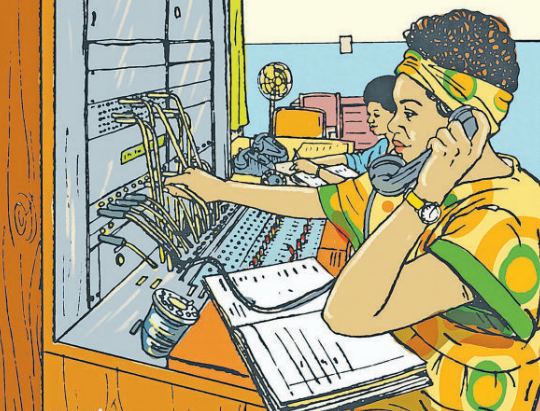
The Daily News reports that Almon Brown Strowger, an American funeral director, invented a system to automate telephone connections in the late 19th century. His invention, the Strowger switch, eliminated the need for human operators to manually wire calls between subscribers. The publication notes that early telephone services relied on operators who physically connected lines, a process prone to delays and potential bias. Strowger reportedly suspected an operator was diverting his business calls to a competitor, prompting him to seek a mechanical solution. In 1891, he received a patent for a step-by-step switching system that used electrical pulses to activate mechanical components. The first commercial exchange using this technology opened in La Porte, Indiana, in 1892. This innovation allowed callers to dial numbers directly, eventually leading to rotary telephones and removing the bottleneck of manual operator intervention.
The article connects this historical milestone to Tanzania’s telecommunications evolution. During the colonial era, telephone networks were limited and depended on manual exchanges. As infrastructure grew, automatic electromechanical systems, including Strowger-type switches, were adopted. The Daily News describes how Tanzanians used fixed-line phones with rotary dials that generated electrical pulses to establish connections. These mechanical switches produced distinct clicking sounds as they moved to link calls. Although these systems were eventually replaced by more advanced crossbar and digital exchanges, they represented a significant shift toward automation. The publication argues that the core principle of Strowger’s invention—automating complex processes to reduce human involvement—remains relevant to modern digital services.
The report outlines five lessons for Tanzania’s digital future based on Strowger’s experience. First, it suggests innovation often stems from solving practical, everyday problems rather than abstract engineering concepts. Second, automation can enhance efficiency in government services and electronic payments by reducing delays. Third, technology can promote fairness by minimizing opportunities for human favoritism or discrimination in service delivery. Fourth, continuous improvement is essential, as older mechanical systems required significant maintenance and were eventually superseded by better technologies. Finally, the Daily News emphasizes that automation must be paired with accountability. While machines reduce certain errors, modern digital systems introduce new risks like cybersecurity threats and data privacy issues. The publication concludes that effective governance and human oversight remain critical to ensuring reliable and fair digital transformation across sectors like banking, healthcare, and agriculture.