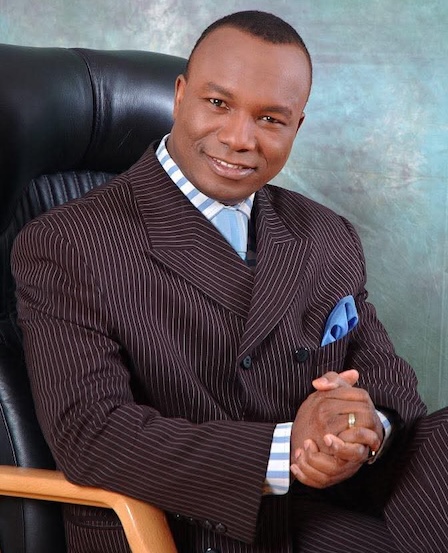
In an analysis published on Premium Times, writer Sunday Adelaja examines the shifting political landscape in Nigeria, arguing that President Bola Tinubu is the primary beneficiary of the divergent paths taken by Peter Obi and Nyesom Wike. The piece posits that while Obi amassed significant emotional capital during the 2023 presidential election, he failed to translate that enthusiasm into a durable political organization. Conversely, Wike, despite facing severe political liabilities after his term as Rivers State governor ended, successfully reconstructed his influence through strategic networking.
Adelaja identifies four distinct levels of political power in Nigeria. Level one consists of personal popularity, which he attributes to Obi. This base included millions of young voters, social media activists, professionals, and dissatisfied members of the ruling All Progressives Congress (APC) and the Peoples Democratic Party (PDP). Level three involves political machinery, such as ward structures, local leaders, and fundraising networks. Adelaja notes that Wike possessed this machinery, which he has now integrated into the newly formed Rainbow Coalition. Level four, the governing coalition, involves negotiation with governors, legislators, and business groups, an asset Adelaja assigns primarily to Tinubu.
The author argues that the combination of Obi’s mass enthusiasm and Wike’s political machinery never materialized. "That combination never materialised," the report states, highlighting the missed opportunity to create a formidable opposition force. Instead, Obi’s movement remained largely a personality-driven phenomenon without the institutional depth required to sustain long-term political power. Adelaja suggests that Obi’s greatest loss was not the election defeat itself, but his inability to institutionalize the goodwill he accumulated.
Wike’s trajectory is described as a resurrection from a position of weakness. After losing his party, facing opposition from his successor, and seeing his G5 allies turn against him, Wike leveraged his existing network to build the Rainbow Coalition. This move has reportedly made even APC governors wary of his influence. Adelaja characterizes this as a display of political sagacity, contrasting it with Obi’s failure to build a similar powerhouse.
The analysis concludes that Tinubu has gained from both dynamics. By capitalizing on Obi’s lack of institutionalization and Wike’s decision to work toward the president’s reelection, Tinubu has consolidated power. The report notes that 31 of Nigeria’s 36 state governors are now members of the APC, suggesting that the political center of gravity has shifted decisively in favor of the presidency.