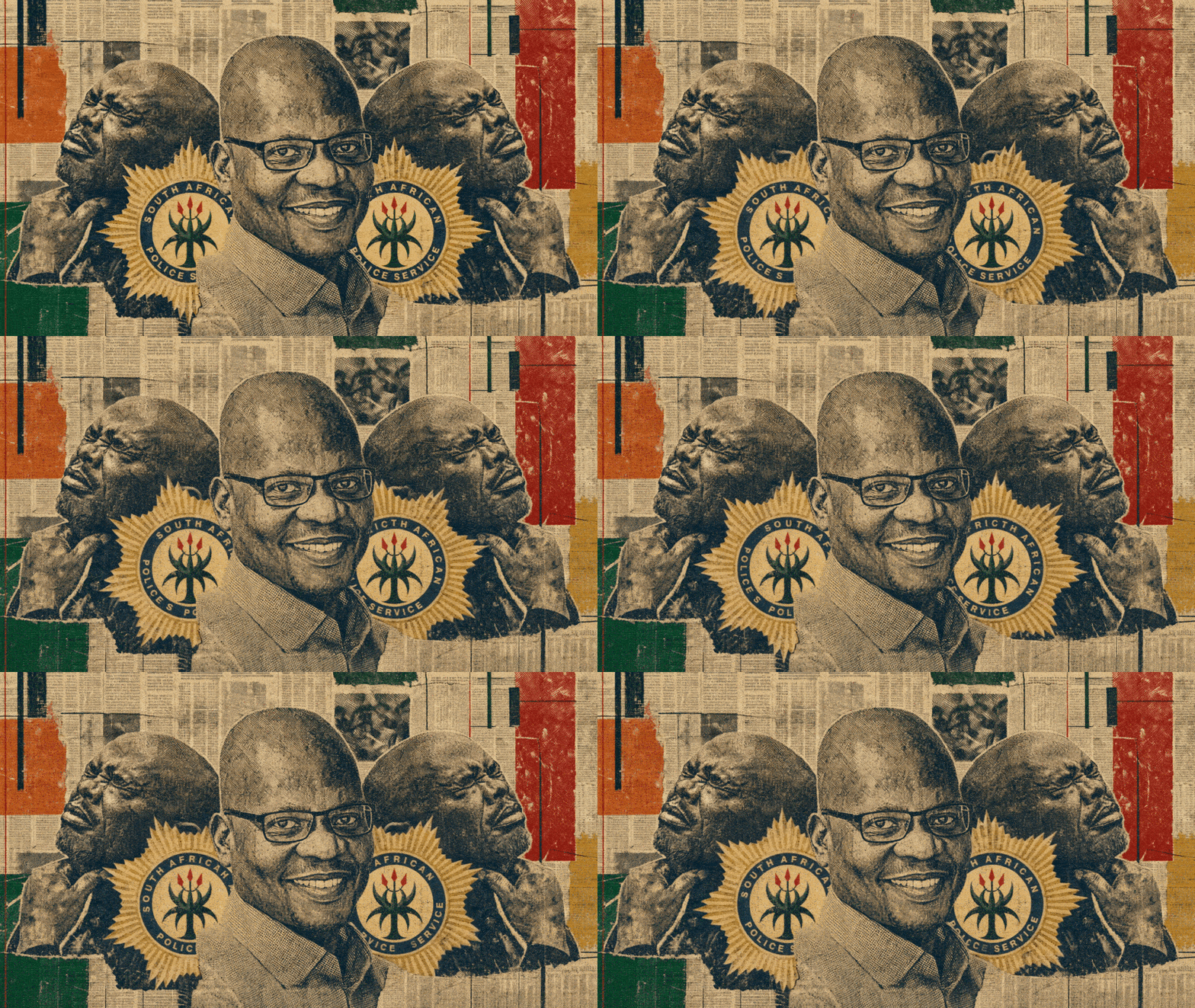
Daily Maverick has published an analysis comparing the professional trajectories of Shadrack Sibiya and Jackie Selebi, two former senior figures in South African law enforcement who experienced significant professional decline. The publication argues that while both men ended their careers as objects of public scrutiny, their paths to the top of the South African Police Service were fundamentally different. According to Daily Maverick, Selebi was a stalwart of the liberation struggle who was appointed by President Thabo Mbeki to transform the apartheid-era police force, whereas Sibiya joined the apartheid police in the 1980s and rose through the ranks using political networking skills.
The analysis details how Selebi’s tenure was compromised by greed after he became influenced by underworld figures, eventually leading to his conviction and death in disgrace. In contrast, Daily Maverick describes Sibiya’s rise as a result of guile and manipulation of political networks rather than pure investigative merit. The publication notes that Sibiya served in the Scorpions and later headed the Hawks in Gauteng, where he allegedly exchanged favours with criminal elements while maintaining a public image of integrity. Daily Maverick highlights that Sibiya’s firing by President Jacob Zuma’s allies initially burnished his reputation, leading to his hiring by Johannesburg mayor Herman Mashaba for an anti-corruption unit.
According to Daily Maverick, Sibiya’s relationship with police minister Bheki Cele was characterized by mutual influence, with insiders suggesting the two shared private knowledge. The analysis states that Sibiya’s influence persisted even after Cele’s departure, as he managed to secure support from successor Senzo Mchunu. The Madlanga Commission of Inquiry into the criminal justice system has examined Sibiya’s conduct, revealing details about his personal habits and professional maneuvers. Daily Maverick suggests that Sibiya’s fall from grace represents a relief for the public, as he narrowly avoided becoming the head of the Hawks or the national police commissioner.
The publication concludes by noting that while Sibiya’s departure removes one figure, the broader power of the underworld in Pretoria remains intact. Daily Maverick points to the farm in the north of Pretoria where many politicians and law enforcers reported, suggesting that the structural issues in the police service continue beyond the individuals involved. The analysis serves as a cautionary tale about the intersection of political ambition and criminal influence in South Africa’s law enforcement history.