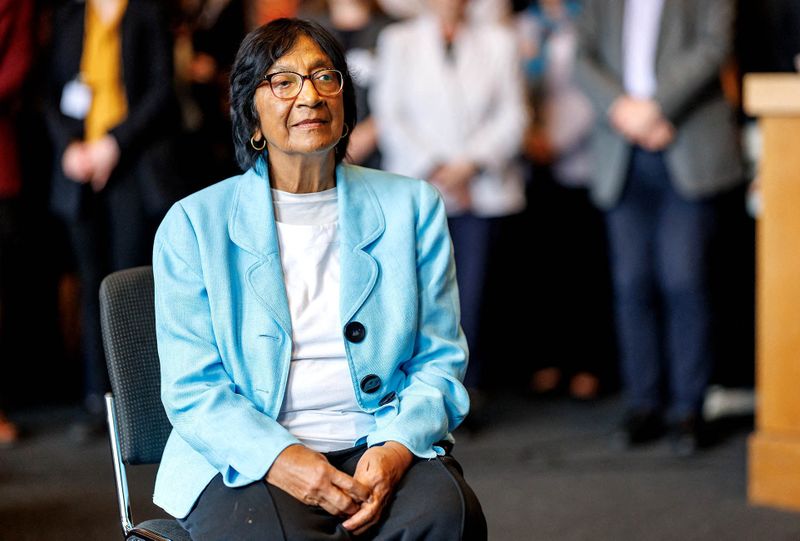
Judge Navi Pillay has been selected as the 2026 Nobel Peace laureate, making her the first recipient in the award's 126-year history to be recognized primarily for her judicial career. According to Daily Maverick, the Norwegian committee observed that her selection drew unprecedented media interest. Pillay, South Africa’s fifth Nobel Peace winner, described the honor as a correction of the prize’s trajectory toward individuals who have adhered to legal principles rather than political agendas.
In a conversation with Daily Maverick, Pillay highlighted her 1998 ruling at the International Criminal Tribunal for Rwanda as a defining moment. That decision, which convicted Jean-Paul Akayesu, marked the first time an international court identified sexual violence as a core element of genocide. She explained that although the initial indictment did not explicitly list these charges, the judges included them after hearing detailed witness accounts. This approach prioritized the full scope of victims' experiences over strict procedural limitations, a method the Nobel committee specifically cited in its justification for the award.
Pillay also assessed the current challenges facing the International Criminal Court, noting that the United States and Russia are actively working to weaken its authority. She explained that these non-member states have imposed sanctions on court staff and threatened to arrest judges who issued warrants against Vladimir Putin. During a recent visit to The Hague, she observed that staff felt vulnerable due to disruptions in their banking and digital connectivity. Her own commission on Israel and Palestine also faced potential US sanctions after concluding that Gaza experienced real-time genocide, a finding that irritated the Trump administration.
The 85-year-old jurist, who began her legal career in 1967, said she continues to serve on the International Court of Justice despite earlier plans to retire. She currently hears the case against Myanmar regarding the Rohingya community. Pillay stated that she feels driven by new responsibilities and intends to continue contributing as long as her health allows. She maintained that her commission’s conclusions remain valid until higher courts issue final rulings, inviting the public to review the evidence and form their own opinions on the legal interpretation.