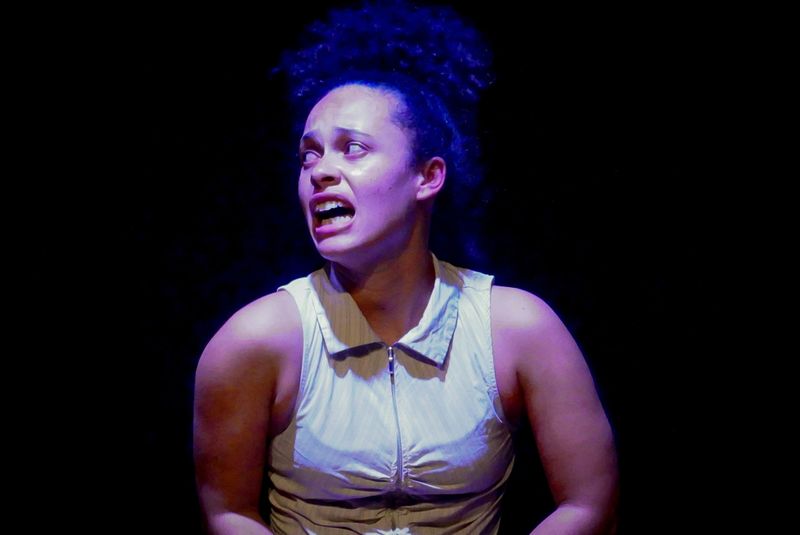
Actor and writer Tshiamo Moretlwe is staging a one-woman play titled Filled at the Baxter Studio in Cape Town. The production runs from 17 to 21 November and was directed by Roshina Ratnam. According to Daily Maverick, the performance debuted at the National Arts Festival last year. Moretlwe stated that her primary interest lay in the aftermath of gender-based violence rather than the explicit acts themselves. The play examines the specific ways society treats survivors after they have endured physical violence and sexual abuse.
The work addresses realities that follow an assault, including victim-blaming, unsolicited advice, and re-traumatization from insensitive reactions. Moretlwe explained that she wanted to complicate simplified narratives often used in public discourse. She noted that quick, catchy slogans fail to expose the full layers of how violence affects individuals. The performance uses humor to disarm the audience, aiming to break down defensive walls so that more difficult conversations can take place. Moretlwe described the work as an allegory, noting that it borrows from real-world interactions, internet comments, and witness statements to create a collage of moments.
Moretlwe’s motivation stems from a long-standing awareness of the prevalence of violence against women in South Africa. She recalled being 13 years old when a news report about a horrific case left her feeling a sense of total helplessness. For years, statistics indicating that one in three women are raped contributed to a feeling that she might be next. She described hating the feeling of disempowerment and the belief that such violence was an inevitable fact of life. Eventually, she decided to take charge of her own narrative and reject the notion that she must accept violence as a given.
The production incorporates elements of physical theatre and puppetry, using paper objects to bring characters to life. Moretlwe draws inspiration from an ancient San poem about a woman who is cut open and sewn back together. She uses this imagery to situate the modern survivor’s journey within a contemporary context. The play asks the audience to consider what happens when survivors try to move forward and how they are met by others. Moretlwe emphasized that the goal is not to speak on behalf of survivors but to help other women find their voice and reclaim their power.