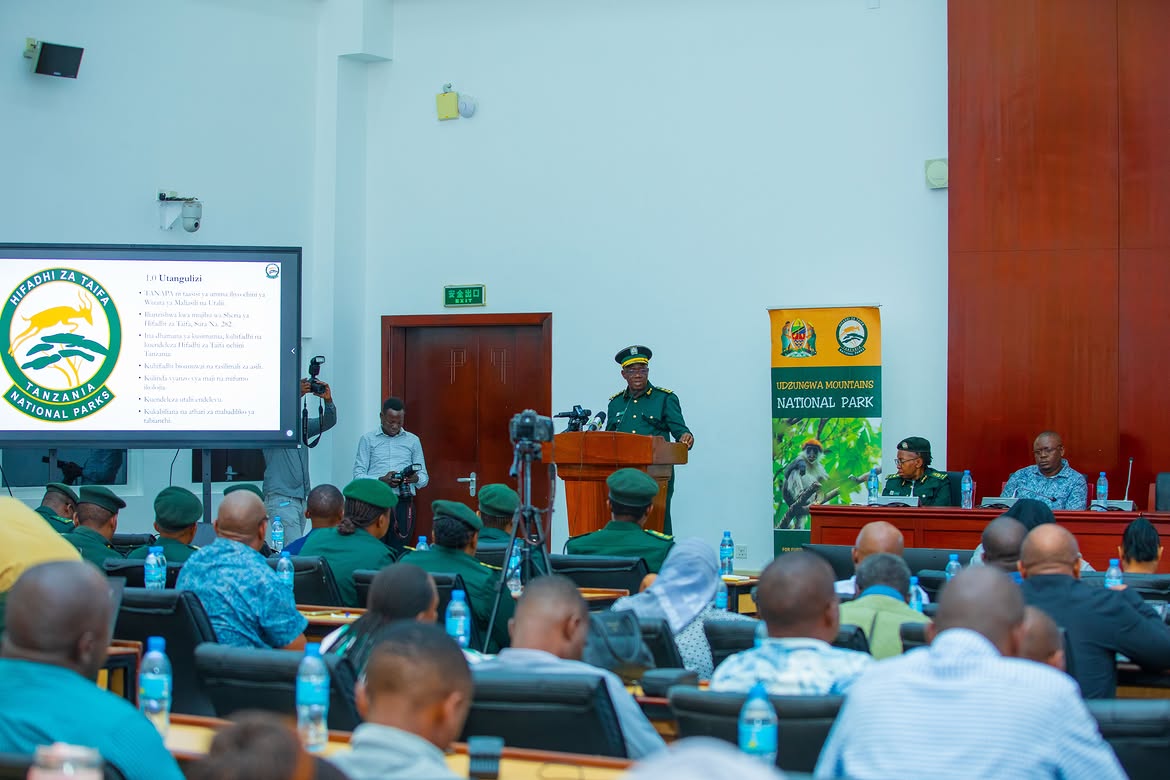
The Tanzania National Parks Authority (TANAPA) reported that its annual revenue more than tripled over the past five years, rising from 174 billion shillings in the 2021/2022 financial year to 534 billion shillings in 2025/2026. According to Daily News, this growth coincided with a substantial increase in international tourist arrivals, which reached 1,559,641 in the most recent financial year. The authority’s Conservation Commissioner, Massana Mwishawa, presented these figures during a meeting with journalists in Dar es Salaam, noting that the average annual growth in revenue was approximately 40 per cent.
Mwishawa attributed the improved performance to the rebound of the travel sector after the disruptions caused by the global health crisis. He also credited the promotion of Tanzania’s attractions through the Royal Tour documentary, which he said helped raise the country’s international profile. While international arrivals surged, domestic tourism showed more modest fluctuations, with local visitor numbers climbing to 412,983 in 2024/2025 before dropping to 381,341 in the latest year.
To support this growth, TANAPA expanded its conservation and surveillance capabilities. The authority conducted over 301,000 patrols and arrested 30,559 suspected poachers, resulting in the seizure of 65,860 livestock and 105 firearms. Conservation efforts contributed to the recovery of endangered species, with rhino numbers estimated at 170 in 2026, up from 128 in 2021. Additionally, the count of habituated chimpanzees grew to 288 from a previous baseline of 196.
Infrastructure development played a key role in enhancing the visitor experience. TANAPA expanded lodging options, boosting available beds to 12,094 in 2026 from 5,755 in 2021 across various facilities. The authority also introduced new tourism activities, including hot-air balloon safaris, rhino tourism, and astronomy tourism. To further attract private sector investment, 160 new sites were identified, comprising 30 lodge locations and 130 camping areas.
Beyond tourism, the authority addressed human-wildlife conflicts and ecosystem restoration. In 2025/2026, TANAPA managed 2,194 conflict incidents across 260 villages and controlled invasive plant species across nearly 9,440 hectares in 15 national parks. The government also secured 40 drones for aerial monitoring and built communication facilities in key parks, including Serengeti and Lake Manyara.