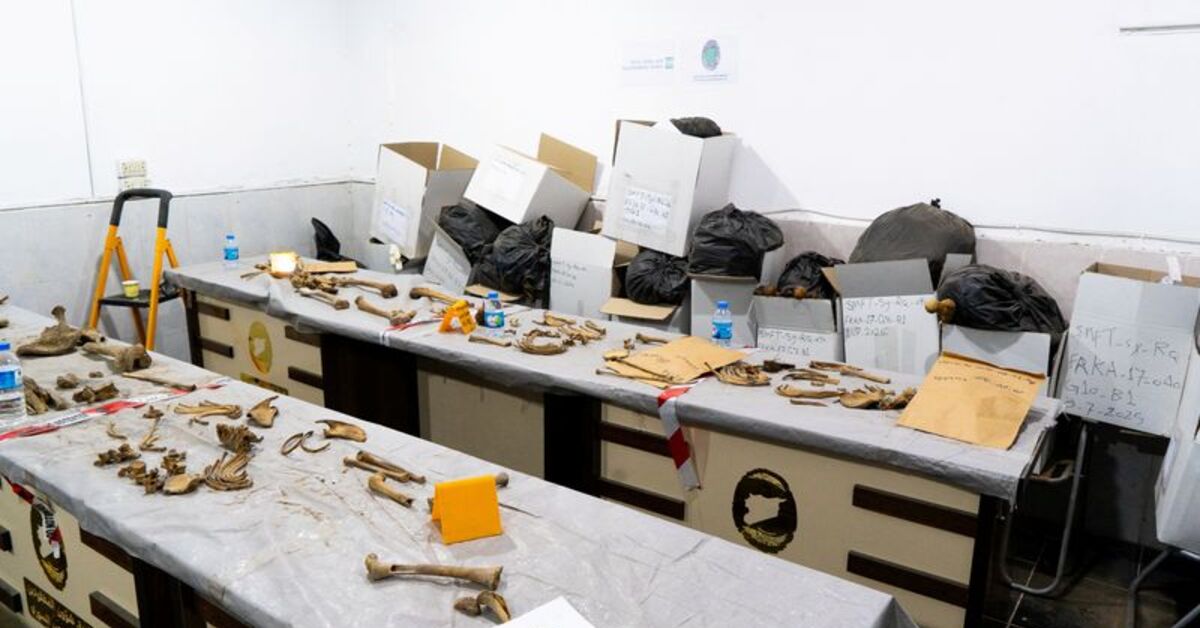
Reuters reported that DNA testing has successfully identified the remains of missing individuals in at least three cases in Syria this year. These represent the country's first DNA-based identifications, offering a new method for determining the fates of people lost during the civil war. Two of the cases were handled by Syria's National Commission for Missing Persons, while the third was completed by a collaboration between Syrian and international non-governmental organizations.
The most detailed case involved the family of Manar Aliwi, who disappeared in August 2017 during airstrikes in Raqqa. The Syrian Missing Persons and Forensic Team, known as SJAC, partnered with the Forensic Anthropology Foundation of Guatemala to investigate. In 2024, decomposing remains were discovered at the site, and genetic analysis confirmed they belonged to Aliwi, her husband, and their five children. The surviving relatives were informed in September 2026, providing closure after nearly nine years of uncertainty.
According to the National Commission, it has collected approximately 96,000 files from various ministries and NGOs, along with around 2,000 samples from human remains. The commission stated that it is receiving an average of 100 new missing-person reports daily under a national program launched in August. It is currently working with the International Committee of the Red Cross to establish a DNA laboratory by May 2027, with a second facility planned with the International Commission on Missing Persons.
SJAC director Mohamed al-Abdullah noted that these results demonstrate the potential of partnerships between Syrian civil society and international experts. He hopes this success will encourage the national commission to collaborate more closely with humanitarian groups. The commission described the progress as an important step, though it acknowledged that a national database of the missing has yet to be fully launched.
For Mohamed Hamadah, the son of the identified family, the identification allows for marked graves and funerals. He said the process has helped put his mind at rest after years of wondering if his relatives had fled to other cities. The United Nations estimates that between 130,000 and 300,000 people remain missing in Syria, a figure that includes those who disappeared under previous leadership and during the conflict with Islamic State forces.