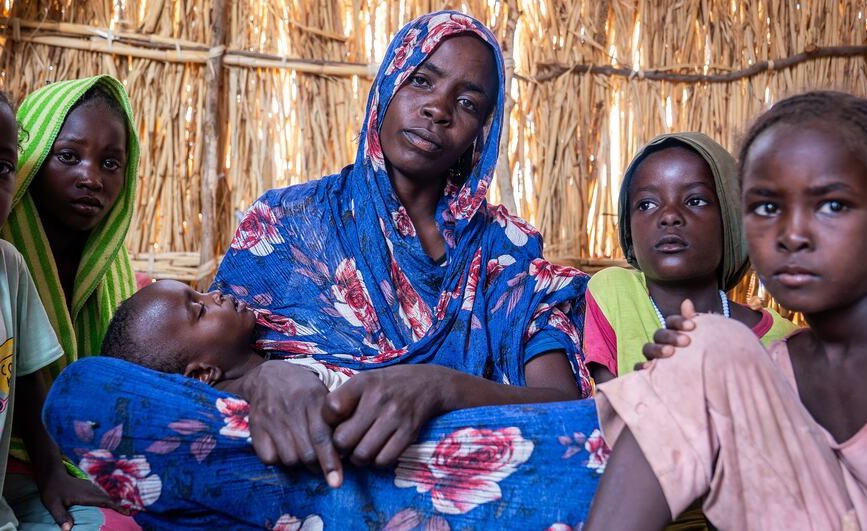
Aid teams operating in Sudan issued a joint appeal on Friday for increased international assistance, citing severe funding shortages and depleted emergency stockpiles. According to AllAfrica, the UNHCR and IOM stated that humanitarian agencies can currently assist only one in ten of the people in need. The conflict, which began in April 2023 between rival military forces, has left 15.4 million people in urgent need of shelter across the country.
Mohamed Refaat, the chief of mission for IOM in Sudan, reported from Khartoum that the agency’s supplies are running out. He noted that while 16 trucks recently arrived in Darfur, they represented the final units in their inventory. Refaat stated that the agency distributed over 40,000 tonnes of relief assistance this year, but warehouses are now completely empty. He warned that without flexible funding, families will face winter conditions without adequate protection from harsh weather and insecurity.
Abubakarr Jalloh, UNHCR’s Deputy Representative in Sudan, emphasized that three in four internally displaced people are women and children. He explained that El Niño-related weather conditions have exacerbated vulnerability due to below-average rainfall, which has affected harvests in Darfur and Kordofan. Jalloh described how basic items like solar lamps and kitchen sets provide essential safety and dignity for displaced families. He added that food prices remain high, forcing families to choose between food and shelter materials.
The agencies noted that over 5.2 million people have returned to their home regions, yet many find their dwellings ruined or stripped of contents. Medical care, power, and water access remain scarce in many locations, risking further displacement. Refaat pointed out that Sudanese citizens are now the most common group reaching Europe through the Eastern Mediterranean corridor, suggesting that inadequate aid in Sudan will impact neighboring countries. The 2026 Humanitarian Needs and Response Plan remains underfunded, with only 47 percent of the required $2.9 billion received so far.