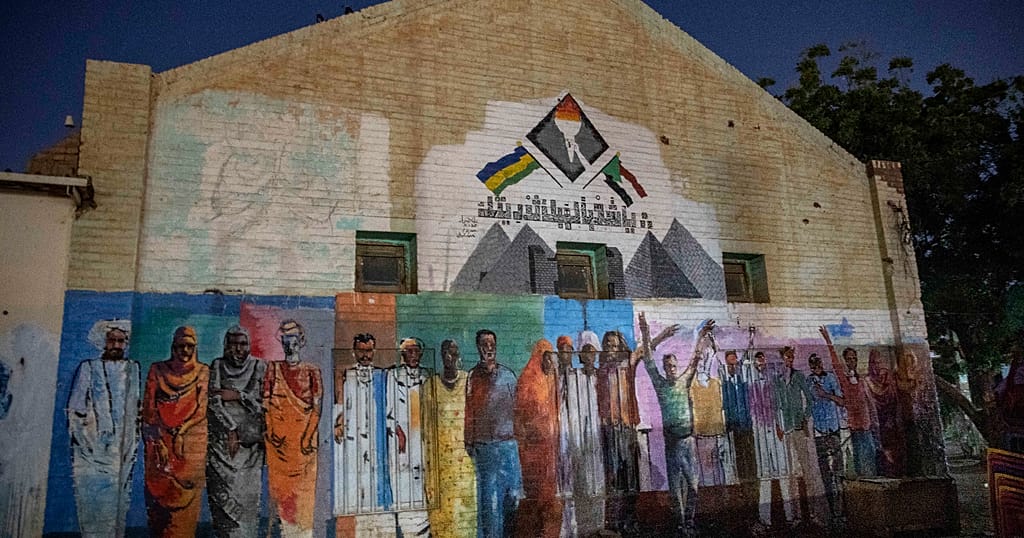
Sudanese musicians from the band Aswat al-Madina have reunited in Cairo to record new material and perform live, marking a significant return to their craft after years of displacement caused by the ongoing civil war. According to Africanews, the group, which became the soundtrack to Sudan’s 2018 pro-democracy uprising, was scattered across multiple continents when fighting erupted between the national army and the paramilitary Rapid Support Forces (RSF). The reunion in the Egyptian capital allows the members to reconnect with their roots and their audience, even as the conflict continues to devastate their homeland.
Founded in Khartoum in 2014, Aswat al-Madina gained prominence for blending folk traditions with jazz and reggae to critique authoritarian rule and social injustice. Their music resonated deeply with protesters during the revolution that ousted longtime ruler Omar al-Bashir. Lead singer Ibrahim Ahmed Taha told Africanews that before the revolution, the band used lyrical techniques that conveyed meaning to listeners while remaining ambiguous enough to avoid immediate censorship. During the protests, their songs were broadcast from phones and makeshift barricades, helping to sustain the momentum of demonstrators demanding democracy.
The outbreak of war between the army and the RSF, former allies in the transition to democracy, forced the band members to flee. Guitarist Mohamed al-Mustafa, known as Timon, escaped to the United Arab Emirates, while other members settled in Egypt and other parts of Africa. They left behind their creative hub in Khartoum, which was looted and destroyed. Timon described the devastation to Africanews, noting that even basic furniture was taken and that the streets were filled with rubble and bodies. The band had been preparing for a performance just two days before the war began, but the conflict swept them away from their lives and careers.
The group’s first performance since the war started took place in August in Cairo, drawing an audience that included Sudanese expatriates. Keyboard player Roba Bashir described the reunion as the happiest day since the war began, while audience member Musab Mahgoub noted that the concerts brought back vivid memories of Sudan. The band is now recording a new version of their song "Nos Kobayet Shai Bi'Aisha" with an Egyptian-Nubian collaborator, focusing on themes of home and family. They hope to tour internationally, using their music to maintain a connection to their displaced community and to keep the spirit of their original movement alive.