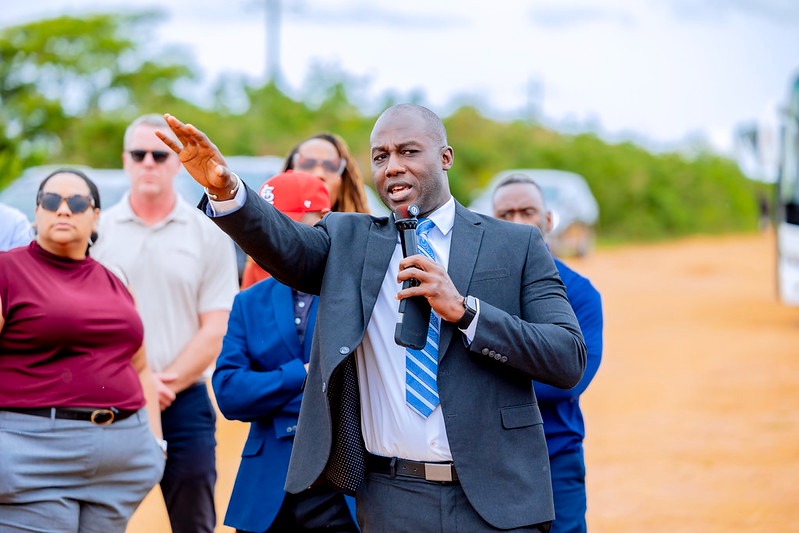
The Donald Danforth Plant Science Center is establishing a broader partnership with the Rwanda Institute for Conservation Agriculture (RICA), KT Press reported. This development builds upon an existing collaboration between Danforth and the Rwanda Agriculture and Animal Resource Development Board (RAB) focused on combating Cassava Brown Streak Disease. Dr. Giles Oldroyd, president of the Saint Louis-based nonprofit, visited RICA’s campus in Bugesera accompanied by a delegation that included Cara Spencer, the mayor of Saint Louis. The institute aims to extend its engagement beyond cassava disease research to encompass conservation agriculture, scientific workforce development, and improvement of other staple crops.
Dr. Oldroyd stated that previous field trials had successfully addressed the cassava problem, allowing the partnership to broaden its scope. He expressed interest in working with RICA on crops such as maize, sorghum, millets, and beans. The expansion aligns with the Rwandan Food Innovation Partnership, a government initiative designed to position Rwanda as a hub for food systems innovation. RICA serves as a founding member and key partner in this program. Dr. Oldroyd emphasized the potential for reciprocal student exchanges and field visits between the United States and Rwanda to strengthen the collaboration.
Dr. Momar Dieng, RICA’s vice chancellor, highlighted the mutual benefits of the alliance. He described Danforth as a premier research ecosystem with a high concentration of PhD scientists dedicated to agricultural improvement. Dieng noted that while Danforth has conducted cassava research in the US, testing technologies on the ground in Rwanda allows them to learn from local scientists. He also praised RICA’s experiential education model, where students utilize advanced infrastructure and equipment to learn through practical application, a feature he suggested is not universally accessible.
The visit included a tour of the RICA seed center, which aims to reduce Africa’s reliance on seed imports from the Netherlands. Solange Uwituze, the Minister of State in the Ministry of Agriculture and Animal Resources, confirmed that the existing Danforth-led VIRCA project has already yielded significant results. Following a devastating outbreak that reduced cassava production from 3.3 million to 657,000 tonnes, the project began in 2019 to develop resistant varieties. The initiative now provides clean cassava to over 700,000 farming households across approximately 200,000 hectares. Uwituze outlined future cooperation areas including smart agriculture, technology transfer, research, agribusiness investment, and climate-smart food security.