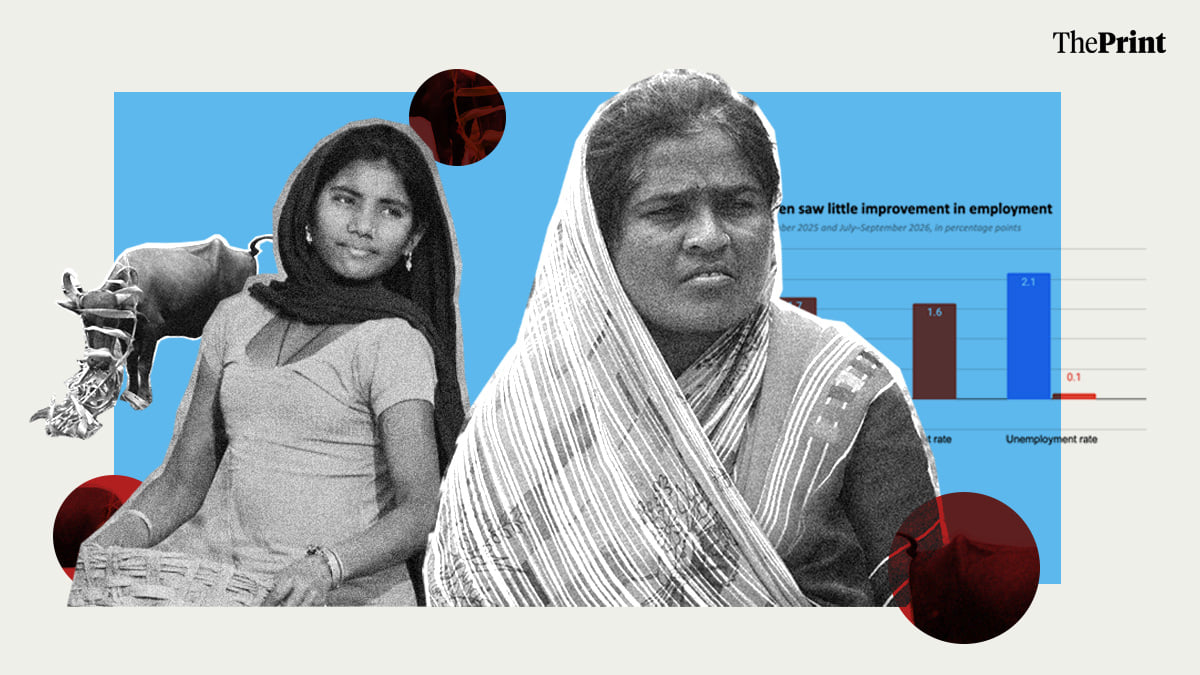
The Ministry of Statistics and Programme Implementation published the latest Periodic Labour Force Survey figures on Tuesday, highlighting a distinct gap in employment trends between age groups. According to ThePrint, the labour force participation rate for rural women aged 15 and above climbed by 1.7 percentage points to reach 39.2 percent in the July–September 2026 quarter. However, this broad improvement did not extend equally to younger demographics. The employment rate for rural women aged 15–29 remained nearly static at 18.4 percent, significantly lagging behind the 37.6 percent average for all rural women.
ThePrint noted that the unemployment rate for this younger cohort surged from 13.3 percent to 15.4 percent year-on-year. This contrasts with the marginal rise observed among all rural women, where unemployment moved from 4 percent to 4.1 percent. Consequently, the survey found that roughly 15 out of every 100 young rural women in the labour force were unemployed, up from 13 the previous year. The National Statistics Office conducted this survey to track labour market indicators for individuals aged 15 and above across the country.
Sectoral breakdowns reveal that agriculture was the primary driver of employment growth for rural women. ThePrint reported that farming contributed 81.25 percent of the total increase in female employment rates between the corresponding quarters of 2025 and 2026. The secondary and services industries offered far smaller contributions, adding 13.75 percent and 5 percent to the growth respectively. This heavy reliance on agriculture differs markedly from the patterns observed among rural men, whose share of agricultural jobs declined from 49.2 percent to 47.2 percent over the same period.
For rural men, employment in the secondary sector, encompassing manufacturing and construction, expanded from 25.9 percent to 27.4 percent. The services industry also recorded a modest gain, rising from 24.9 percent to 25.4 percent. Despite these sectoral shifts, the overall employment rate for rural men stayed largely constant at approximately 75 percent. The data suggests that while more rural women are entering the workforce, their job opportunities remain heavily concentrated in agriculture, particularly for those under 30.