The South African Communist Party (SACP) has significantly expanded its political footprint following the local elections, winning 271 council seats and capturing 2.38% of the national vote. According to Daily Maverick, this result represents a strategic shift for the party, which traditionally drew support from the urban industrial working class in Gauteng and KwaZulu-Natal. Instead, the party’s gains were concentrated in the Eastern Cape, Limpopo, North West, and Mpumumalanga, regions characterized by rural, peri-urban, and mining-adjacent demographics. In specific wards such as King Sabata Dalindyebo’s ward 16, the SACP secured 46.8% of the vote, while the African National Congress (ANC) share plummeted from 82.7% to 31.4%. This shift suggests that voters in municipalities where the local government is the primary economic actor are responding to the SACP’s critique of the current public procurement model.
The SACP’s 2026 manifesto, launched under the banner "Build People’s Power Where We Live," centers on a platform of municipal insourcing and procurement reform. The party argues that the post-1994 Reconstruction and Development Programme (RDP) was transformed from a community-driven initiative into an outsourced commercial machine. Former Public Protector Thuli Madonsela, speaking to Daily Maverick, noted that the original vision for RDP housing involved providing money and architects while allowing residents to build their own homes. "The government was going to provide the money, provide architects," she stated, highlighting how the program evolved into a tender system that failed to deliver sufficient housing or maintain community self-reliance. The SACP contends that this shift created a rent-seeking economy where political proximity to budgets incentivizes exploitation rather than value creation.
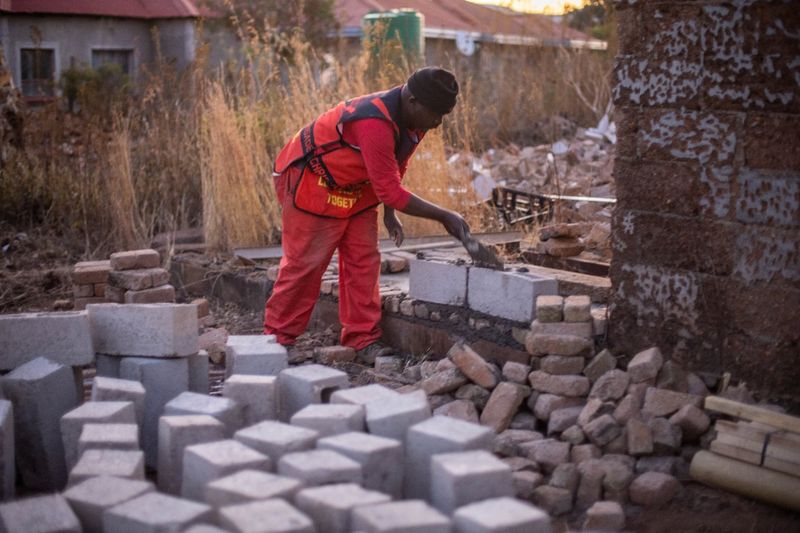
To address these issues, the SACP has proposed ending what it describes as a "legalised crime" of tendering, employing municipal technicians directly, and implementing participatory budgeting. The party also pledged to release municipal land for social housing and food gardens, and to ensure councillors can be recalled by their communities. These proposals are framed as a return to a developmental state model where the government creates fair conditions for job creation rather than relying on a small number of contractors. The party backed its manifesto with physical actions, sending volunteer brigades through five provinces to drill boreholes and repair infrastructure, demonstrating a practical approach to service delivery that contrasts with national political rhetoric.