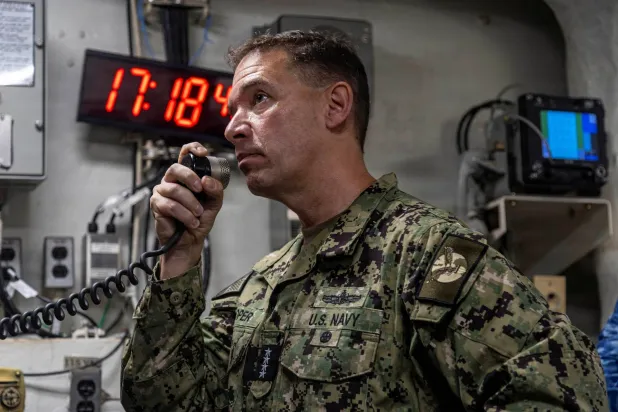
Admiral Brad Cooper, the commander of US Central Command, traveled to Israel on Wednesday for meetings with senior Israeli defense and intelligence officials. According to Al-Monitor, the visit focused on coordinating military and strategic responses regarding Iran. The Israeli military confirmed that Cooper met with Chief of Staff Lieutenant General Eyal Zamir and Mossad Director Roman Gofman in Tel Aviv. The discussions also included Operations Director Itzik Cohen and Planning Director Major General Hidai Zilberman, as reported by Al-Monitor.
The timing of the CENTCOM chief’s arrival aligns with intensified diplomatic efforts by Israeli Prime Minister Benjamin Netanyahu. Al-Monitor reports that Netanyahu is actively pressuring Washington to resume major combat operations against Iran. This push for renewed military action adds urgency to the coordination discussions between the two allies. Cooper is scheduled to continue his regional diplomatic tour by heading to Saudi Arabia following the meetings in Israel.
Beyond the immediate bilateral talks, the visit reflects a broader pattern of Iranian counter-diplomacy in Lebanon. Asharq Al-Awsat details how Tehran closely monitors US movements in Beirut, often dispatching its own envoys to match American initiatives. This strategy aims to prevent Washington from dictating Lebanon’s political future alone. A former Lebanese prime minister told Asharq Al-Awsat that Iranian officials routinely follow US visits, even when no immediate discussions are planned.
This pattern of mirrored diplomacy has been evident since the 2024 war. Asharq Al-Awsat notes that Iranian Foreign Minister Abbas Araghchi visited Beirut on October 4, followed by Parliament Speaker Mohammad Baqer Qalibaf a week later. These visits were designed to convey messages of support from Supreme Leader Ali Khamenei and to gauge Washington’s positions behind closed doors. The Iranian strategy seeks to maintain leverage over Lebanese political settlements and ensure that Tehran’s interests remain central to any regional agreements.
The contest for influence extends to issues such as Hezbollah’s weapons. Asharq Al-Awsat reports that US Ambassador Mike Waltz recently urged Hezbollah to voluntarily hand over its arms, stating that no country can have two armies. In response, Qalibaf called Parliament Speaker Nabih Berri on the same day, emphasizing Iran’s special interest in Lebanon and the need to restore full sovereignty. Former Lebanese minister Boutros Harb told Asharq Al-Awsat that Iran treats Lebanon as a subordinate entity, exploiting the situation to preserve its regional role despite changes in Lebanon’s political leadership.