The founder of the Campaign on Digital Ethics argues that the current era of digital connectivity has resulted in increased human isolation. In a reflection published by Daily Maverick, she contends that while modern technology allows for instant global communication, it often leaves individuals disconnected from their immediate neighbors. This disconnection, she suggests, is fundamental to the current political landscape, where authoritarianism and oligarchy thrive on separation.
The author describes this moment as one of "end times fascism," a term popularized by Naomi Klein and Astra Taylor in their recent book. This concept refers to a political dynamic where wealthy elites respond to planetary crises by deciding who survives, often through literal and metaphorical bunkers. This worldview, rooted in neoliberal politics, prioritizes individual consumption over community membership. The author notes that this separation is exacerbated by the rise of synthetic intimacy and AI-driven companionship, which further monetize human attention and relationships.
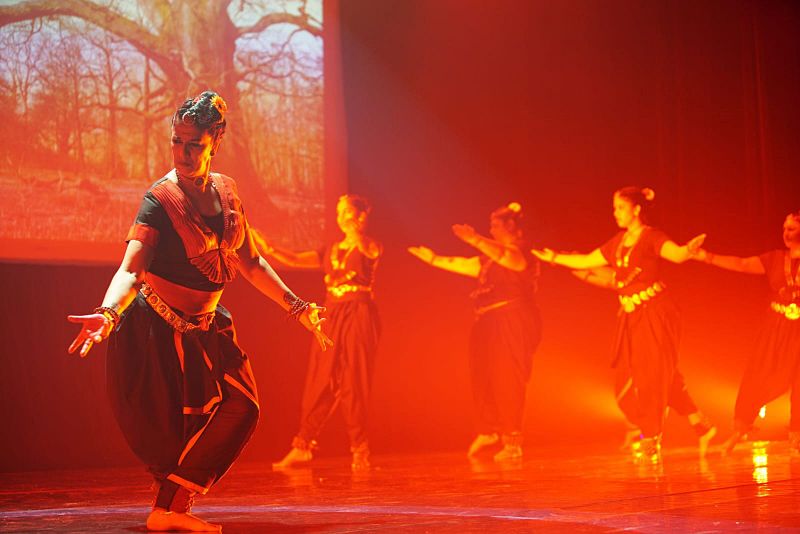
To counter this optimized reality, the author highlights the value of shared human rituals. She recently co-created an experimental dance production titled Bhūmi, which translates to Earth in Sanskrit. The production, set to be performed at the Joburg Theatre on November 13 and 14, utilizes the classical Indian artform of Bharatanatyam. This artform relies on the transmission of knowledge from generation to generation through patience and physical attention, offering a direct contrast to the frictionless efficiency of digital platforms.
The author argues that art provides a space for collective experience that cannot be easily simulated by machines. She references the Indlulamithi 2035 scenarios, developed by the Mapungubwe Institute for Strategic Reflection, which imagine a future where investment in arts and culture becomes essential for rebuilding social cohesion in South Africa. In this vision, people return to shared cultural spaces even in a society saturated by artificial intelligence. The author concludes that protecting these spaces for human connection is a form of resistance against a political moment organized around separation.