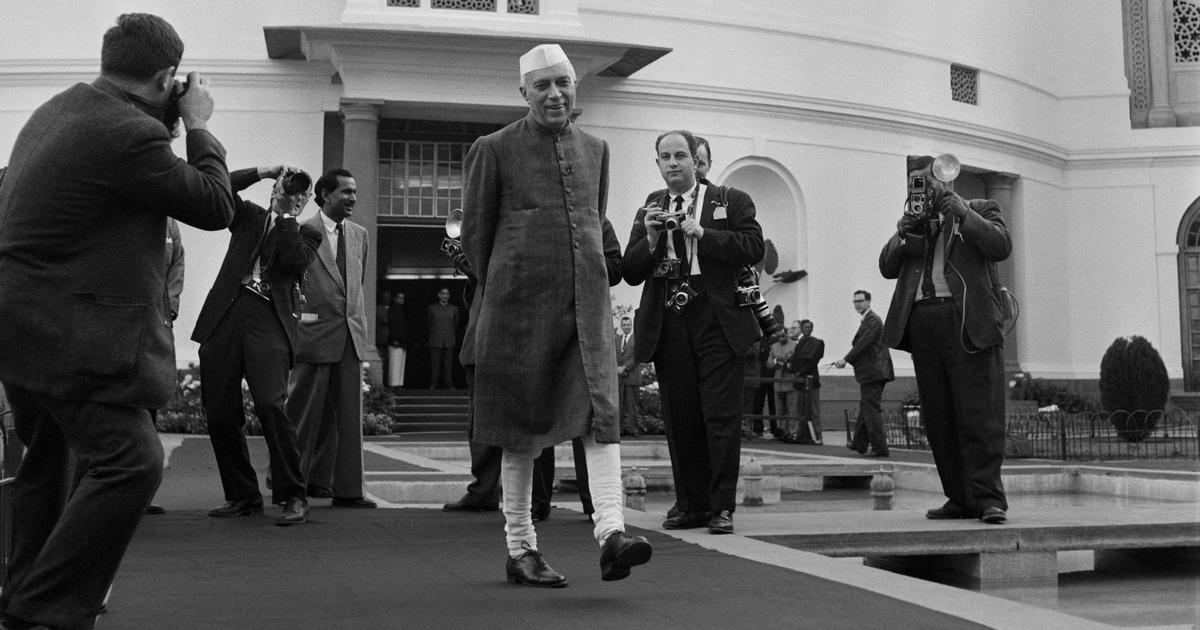
Ramachandra Guha has described Walter Crocker’s 1966 biography, Nehru: A Contemporary’s Estimate, as essential reading on India’s first prime minister. Writing in Scroll on the occasion of Jawaharlal Nehru’s 137th birth anniversary, Guha placed Crocker’s work alongside other seminal texts by Rabindranath Tagore and BR Ambedkar. Guha noted that while the book is among the least known of this quartet, it offers a unique perspective from a foreign diplomat who served as Australia’s high commissioner in New Delhi during the 1950s.
Crocker’s assessment of Nehru’s tenure focuses on three primary achievements. He judged the prime minister’s most significant success to be holding the country together amidst religious rivalries, poverty, and illiteracy. A second achievement was the encouragement of parliamentary democracy and independent institutions, while a third was the forging of a secular state that piloted social reforms for women. Guha reported that Crocker also praised Nehru’s writing, specifically his autobiography, which he said painted an attractive portrait of an unusual man.
However, Crocker’s verdict on Nehru’s economic policy was mixed. He praised the five-year plans for building industrial infrastructure but criticized the proliferation of licenses and the neglect of agriculture. Guha noted that Crocker observed Nehru’s economic thought as a muddled mix of Marxist and liberal strains that failed to form a functioning synthesis. Crocker also criticized Nehru for staying in office too long, arguing that stepping down earlier would have helped parliamentary democracy by allowing a controlled transition of power.
The biography also explores the political rift between Nehru and C Rajagopalachari. Crocker admired Rajagopalachari’s intellect and suggested that bringing him back into the cabinet could have bridged the divide between north and south India. Instead, Rajagopalachari formed the Swatantra party and critiqued Nehru’s policies. Guha quoted Crocker’s observation that reconciliation proved unreachable, leaving both men to share blame for the fission between them.
Beyond policy, Crocker detailed Nehru’s personal charisma and public engagement. He described Nehru’s ability to speak unprepared in English and repeat it word-perfectly in Hindustani. Crocker noted that Nehru’s prestige stemmed from his devotion to the national interest and his personal charm, rather than mass media. Guha concluded that the book remains the best study of Nehru’s age, offering insight into a leader who sought power for a cause rather than for himself.