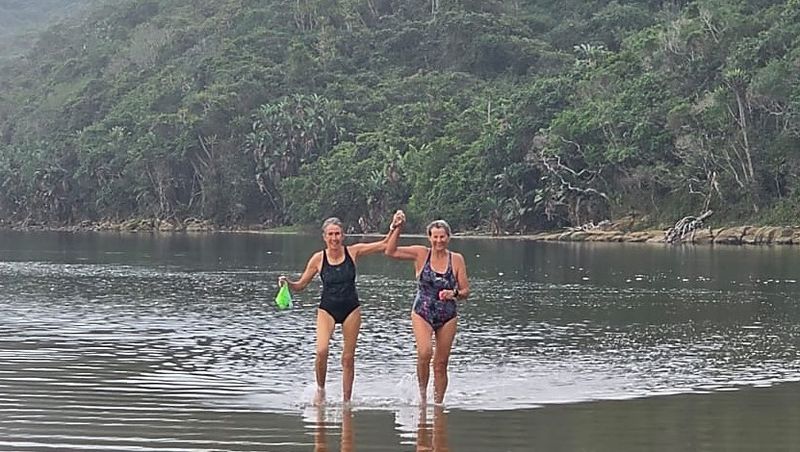
Janine Lochrenberg, a 65-year-old open-water swimmer, was killed by a shark at Orient Beach in KuGompo City, South Africa, according to a personal account published by Daily Maverick. The incident occurred on a Tuesday morning when the water temperature was 15°C, a condition the publication notes is favorable for great white sharks. Lochrenberg was swimming solo when she was attacked, an event described as the first shark attack in recorded memory at that specific beach, which is protected by a pier and a seawall.
Mike Loewe, a journalist and swimmer who was in the water with Lochrenberg, recounted the rescue effort. He observed a large wound on her upper right thigh and a gash on her right upper arm, leading him to conclude she had been mauled. Loewe and other swimmers, including Joy “Coach Roach” and Dr Mandy Uys, cradled Lochrenberg as they paddled back to shore. On the beach, Mark Roach, a Deaf South African Olympian swimmer, assisted in moving Lochrenberg to the sand where Jessica Broodryk, an advanced life support medic, began CPR. Despite these efforts, medics declared her dead after carrying her to the road near the lifesaver complex.
Kevin Cole, principal scientist at the East London Museum, analyzed the wounds with input from shark researchers Dr Geremy Cliff and Dr Matt Dicken. Cole stated that the wound morphology, including serrated tooth marks and interdental gaps, indicated the shark was likely a great white greater than 3.5 meters long. The team ruled out bull and tiger sharks based on the cold water temperature and the species' typical preferences for warmer waters. Cole noted that seven great white sharks had been observed from the air in Chintsa Bay just two days before the attack.
Lochrenberg’s death has prompted reflection within the local swimming community, who refer to themselves as “oceanators.” Loewe described the group’s bond, noting that they often swim solo despite the risks. He recalled that Lochrenberg was aware of the dangers, stating, “It was a risk she was prepared to take.” The community plans to return to the water, potentially using heavier shark deterrents, while also campaigning for improved shark-spotting facilities at the beach. The incident highlights the ongoing interaction between humans and endangered great white sharks in the region.