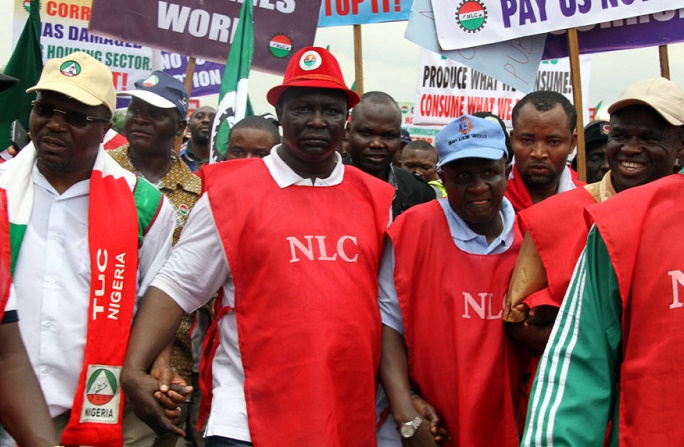
The Nigeria Labour Congress has maintained that its two-week ultimatum to the Federal Government remains in force, demanding relief from rising petrol prices and fresh negotiations on the national minimum wage. According to Punch, NLC president Joe Ajaero stated on Monday in Abuja that workers continue to face severe economic pressure despite the 2024 agreement that raised the minimum wage to N70,000. Ajaero argued that the current wage level has become inadequate for meeting basic household needs, particularly regarding food and transportation costs.
During a retreat of the National Salaries, Incomes and Wages Commission, Ajaero urged the government to address declining purchasing power proactively rather than waiting for industrial action. He criticised the implementation of the 2024 wage deal, disputing claims that federal workers received a 133 per cent increase. Ajaero noted that the government added N40,000 to salaries, a figure he argued did not translate to the percentage increase often cited. He described the situation as one where workers struggle to afford essential goods, stating that the core issue is not the threat of a strike but the inability to eat after buying fuel.
The Secretary to the Government of the Federation, George Akume, responded by calling for a balance between workers’ demands and the government’s fiscal capacity. Represented by Dr Abubakar Kana, Akume warned against avoidable industrial disputes and emphasised the need for wage decisions to reflect economic realities. He identified the approaching 2027 general elections and ongoing economic reforms as factors making a sustainable wage system more pressing. Akume urged the commission to strengthen policy coordination and digital transformation to support evidence-based decisions.
Junaidu Bindawa, chairman of the National Salaries, Incomes and Wages Commission, stated that the retreat aimed to reposition the body for greater effectiveness. He highlighted the need for a strategic approach to wage administration amidst inflationary pressures. Olajumoke Okoya-Thomas, the commission’s secretary, noted that the establishment of the permanent commission in 1993 replaced previous temporary review bodies. She added that the retreat would examine issues including data reliability and institutional capacity, aiming to produce an action plan aligned with national development goals. Abel Enitan, Head of the Civil Service, linked these reforms to President Bola Tinubu’s ambition to build a one-trillion-dollar economy by 2030.