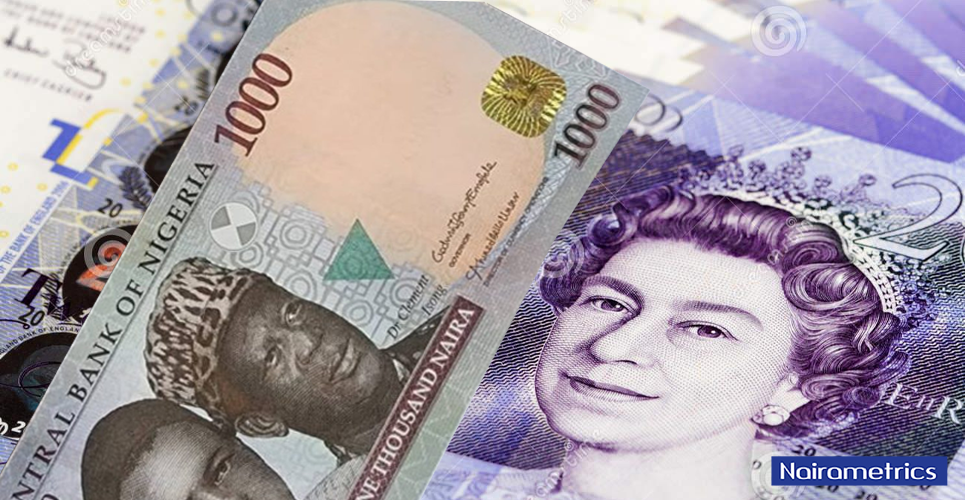
The Nigerian naira has stabilized in the official foreign exchange market, with the Naira Foreign Exchange Market (NFEM) rate for the British pound recorded at N1,808.3 per pound. According to Nairametrics, this level represents a slight retracement from the monthly high of N1,814.44 per pound reached on November 4. The currency has since traded within a narrow intra-month range, stabilizing above the psychological level of N1,780. This movement follows a period of volatility where the pair began November trading around N1,802.21 per pound before rallying sharply. While the official rate has shown resilience, the parallel market continues to operate at a significant premium, with rates trading between N1,870 and N1,900 per pound depending on location and transaction size. This divergence highlights the ongoing disconnect between official windows and street-level demand.
The Central Bank of Nigeria (CBN) is widely expected to maintain its current monetary policy stance at its Monetary Policy Committee meeting on November 24. In September, the bank implemented a 350-basis point cut to the Monetary Policy Rate (MPR), lowering it to 23% to ease policy transmission as inflation declined to approximately 15.4%. The decision to hold rates steady is supported by Nigeria’s attractive nominal yield premium compared to G7 currencies, which continues to draw foreign portfolio investment. Additionally, net external reserves remain robust at approximately $55.3 billion, well above the CBN’s full-year target of $51.04 billion. These reserves, bolstered by higher oil prices driven by geopolitical risks and local refiners, provide the central bank with the capacity to defend the official front-end of the foreign exchange market.
Global currency dynamics are also influencing the naira’s performance. The British pound has gained ground against the US dollar, rising to $1.3260 from the $1.3250 area. This appreciation follows the release of preliminary data from the UK’s National Statistics office, which showed that the UK’s third-quarter Gross Domestic Product increased by 0.7%. The data revealed that robust industrial production helped drive this growth, with industrial output increasing 3.1% year-on-year, the highest growth recorded. The services sector also expanded, capturing a gross value added increase of 0.9% in the three months to September. These figures have strengthened the pound, adding upward pressure on the GBP/NGN pair.