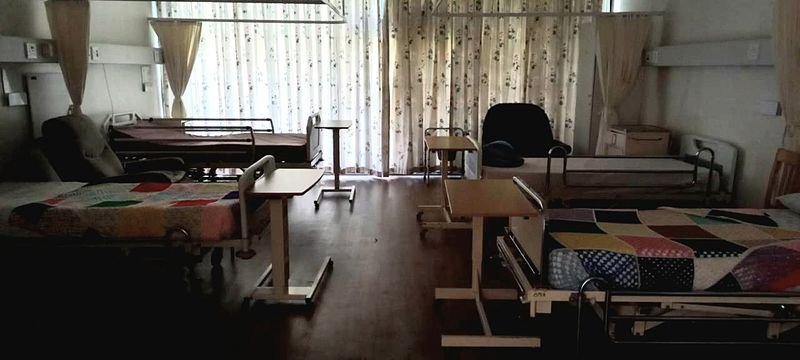
A coalition of former employees and volunteers from St Luke’s Combined Hospices has published an open letter arguing that the closure of the organisation’s Inpatient Unit (IPU) has severely compromised palliative care for the terminally ill in South Africa. The group, identifying itself as Put Patients First, contends that the facility’s closure in December 2024 has left patients with complex symptoms and exhausted families without access to specialist end-of-life support. They assert that the building remains empty almost two years later, while families continue to struggle with inadequate home care options. According to the Daily Maverick, which published the op-ed on 19 November 2026, the group is raising these concerns because patients often cannot advocate for themselves when their conditions deteriorate. The letter was amended to remove a reference to a different NGO, Living Hope, before publication.
The advocacy group challenges the narrative that most patients prefer to die at home, describing this as a universal solution that ignores the realities of overburdened public health systems. They note that community home-based carers typically visit only twice a week for 90 minutes, leaving families to manage crises alone. When patients deteriorate outside these hours, families often call ambulances, resulting in long waits in emergency departments. The former staff argue that general hospital beds, even with curtains for privacy, cannot provide the compassionate, person-centred care that a specialist hospice offers. They describe a scenario where panicked families call for help, only to face a system that lacks the capacity to provide dignified care. "Panicked, they call an ambulance," the document excerpt notes, highlighting the desperation families face when community support fails.
Put Patients First also disputes St Luke’s justification for the closure, which cited low occupancy rates of three to five patients compared to 600 registered community patients. The former staff argue that these figures are misleading, attributing low inpatient numbers to financial difficulties and the discontinuation of 24-hour nursing cover in 2023. They claim that a waiting list existed and that patients sometimes died before being admitted. The group cites a recent PwC audit that raised concerns about governance failures and a culture of fear at St Luke’s, suggesting the board has not adequately addressed these issues. Instead, they argue, the board has removed a vital service without ensuring equivalent alternatives are available.