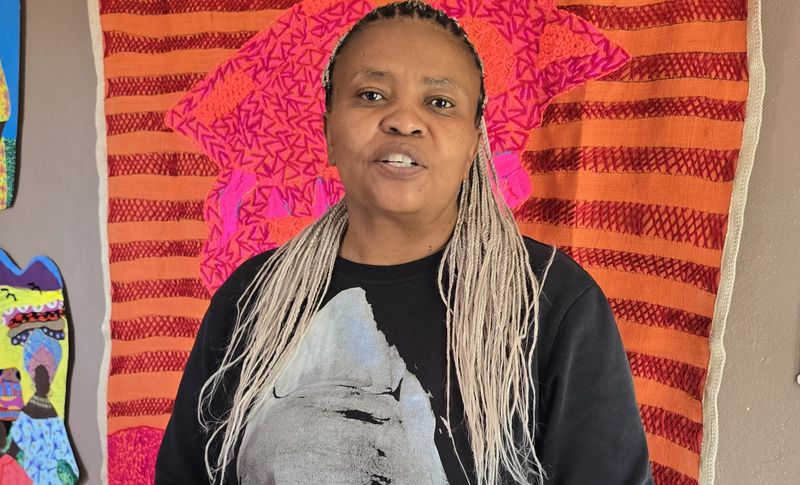
Lerato Motau, a creative based in Soweto, has converted her experience with dyslexia into a primary method for visual communication. Daily Maverick reports that she received a formal diagnosis at age 16 after years of academic struggle, including repeating Grade 8 three times before the underlying issue was identified. This late recognition led her mother to enroll her at the Johannesburg Art Foundation, where she completed a diploma in 1998. The shift from mainstream schooling to an art-focused environment allowed her to develop strategies, such as requesting oral examinations, which she later identified as key to managing her condition.
According to Daily Maverick, Motau’s artistic practice centers on heavily textured fibres, paint, and embroidery. She views the physical act of stitching as a form of therapy, describing the process as a way to repair herself and convey her personal journey without relying on written words. By positioning her neurodivergence at the heart of her creations, she challenges the common assumption that dyslexia implies a lack of intelligence. Instead, she presents it as a distinct cognitive style, using her gallery talks and exhibitions to encourage viewers to rethink their preconceptions about how neurodivergent minds operate.
Her career has included solo exhibitions across South Africa and international displays in locations spanning Europe, Asia, and North America. A significant highlight of her portfolio is a 17-metre-long piece titled Fabric of the Universe, which explores themes ranging from the cosmic to the microscopic. Daily Maverick notes that this work is permanently installed at The Leonardo in Sandton. She has also organized specific group and solo shows, including one focused on the artist’s perspective on dyslexia, to further engage audiences with these themes.
Motau has extended her approach to her family, raising two daughters where one shares her dyslexic traits and studies fashion design. Through her studio in Soweto, she runs fundraising events and garment auctions designed to support disadvantaged learners in accessing educational psychologists. This initiative links her personal artistic resilience with a broader mission to improve educational support for neurodivergent students in her community.