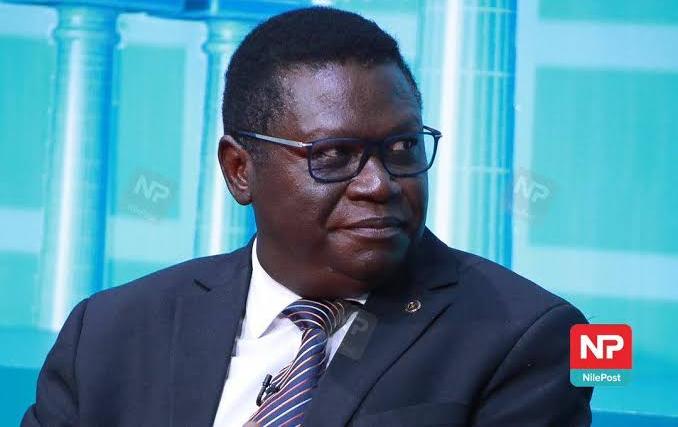
Norbert Mao, president general of Uganda’s Democratic Party, has instructed leaders to prioritize reconstructing grassroots structures for the 2031 elections. Speaking to journalists, Mao argued that electoral success depends less on national contests or social media presence than on establishing strong political bases within constituencies. He emphasized that leaders must mobilize supporters and develop candidates capable of winning positions, rather than relying on online visibility.
Mao highlighted the need for veterans to guide the newly elected leadership, many of whom are young and inexperienced. According to Nile Post, he noted that these leaders were elected during the recent conference in Mbarara. "Many of them have never led before," Mao said, adding that senior members must point them in the right direction. He urged leaders to return to local branches to organize from the ground up, suggesting that national disputes often create an illusion of influence without translating into votes.
The call for unity follows the 2025 national delegates’ conference in Mbarara. Nile Post reported that the event was marked by disputes over leadership and the party’s cooperation agreement with the ruling National Resistance Movement. Mao secured another term with 969 votes, defeating Michael Lulume Bayiga, who received 339 votes, and Elia Alitia, who garnered 52 votes. Despite the results, rival factions continue to challenge the conference’s legitimacy, with some members, including Bayiga, eventually leaving the party.
Mao proposed using this conflict as an opportunity to rebuild internal cohesion. He compared the desired grassroots organization to the Catholic Church, where local institutions operate independently of central direction. To illustrate building a political base, he recalled his own return to Gulu in 2005 after losing the party presidency, a move that allowed him to reorganize and return stronger. He cautioned against politicians who frequently change constituencies, arguing that sustained political work requires consistency and patience.
The Democratic Party now faces the challenge of translating this mobilization into electoral gains while addressing grievances over its relationship with the NRM. As the 2031 elections approach, rebuilding local branches will require recruiting supporters and identifying candidates, while also restoring trust among members who hold competing views on the party’s political direction.