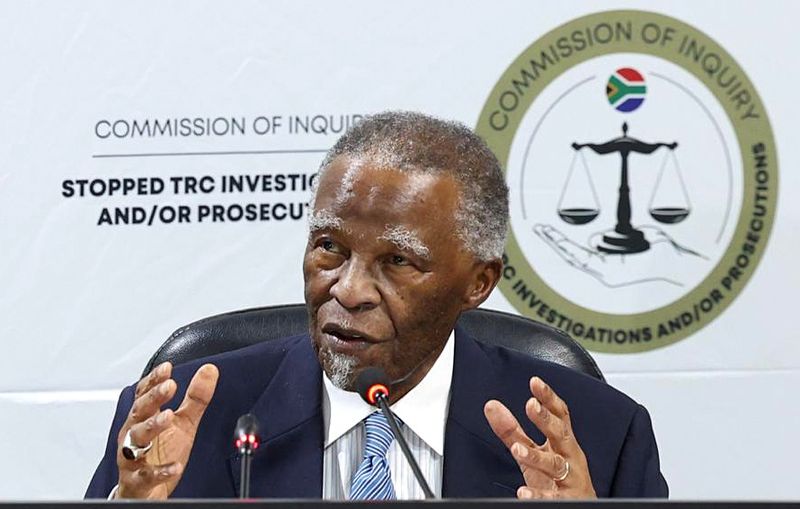
Former South African President Thabo Mbeki testified on Monday that he did not strike secret deals with apartheid-era military generals to shield them from justice. Speaking at the Khampepe Commission of Inquiry in Johannesburg, Mbeki addressed allegations that political interference delayed the resolution of cases from the white minority rule era. According to Africanews, he described the claims of a clandestine agreement as a "complete fabrication" and argued that the National Prosecuting Authority must explain its own delays.
Daily Maverick reported that Mbeki denied initiating secret talks, stating that former generals approached the African National Congress in 1996 while the Truth and Reconciliation Commission was active. He explained that the generals expressed concern that if they did not apply for amnesty, President FW de Klerk and his cabinet might not do so either. In response, the ANC leadership chose to seek group amnesty for its own political figures to create moral leverage. Mbeki noted that this strategy, known as the "Group of 37," was eventually overturned by the courts, ending the ANC's attempt to lead by example.
Mbeki distinguished between presidential pardons and prosecutorial decisions, telling the panel that he was "President of the Republic of South Africa and not prosecutor." He argued that his 2003 parliamentary speech, which mentioned prosecutors working with intelligence agencies, was intended to encourage truth-telling rather than suppress cases. Africanews noted that critics have long argued this cabinet response paved the way for political interference, but Mbeki maintained that the arrangement was purely operational to manage hidden arms caches and secret networks from the apartheid era.
The inquiry, ordered by President Cyril Ramaphosa last April, follows lawsuits by victims' families against successive governments. Africanews reported that the Truth and Reconciliation Commission, chaired by Archbishop Desmond Tutu, received approximately 7,000 amnesty applications between 1996 and 2000. While roughly 850 were granted, about 5,400 were refused, leaving many families waiting for justice. The commission sent around 300 matters for further review, yet few led to successful court outcomes. Mbeki’s testimony continues Tuesday, with former Cabinet ministers and President Jacob Zuma expected to appear later this week.