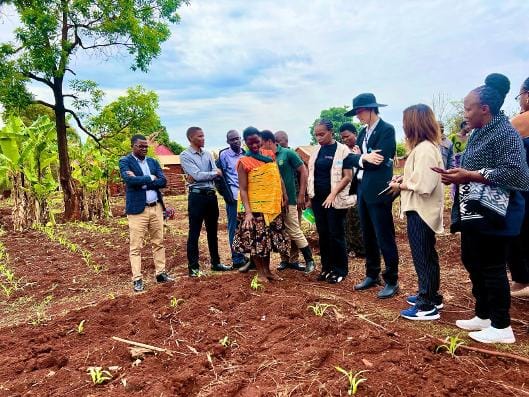
Two distinct initiatives in Tanzania and Nigeria are advancing strategies to bolster community resilience against climate-related disasters. In Tanzania’s Kigoma Region, a project funded by the Government of Japan and implemented by UN Women is focusing on gender-responsive disaster preparedness. Simultaneously, Nigeria’s National Economic Council has endorsed a six-year, $350 million programme supported by the World Bank to upgrade national emergency response infrastructure. These developments highlight a growing international focus on integrating local community needs into broader climate adaptation frameworks.
The Tanzanian initiative, assessed during a joint field visit by Japanese and UN Women representatives on November 11 and 12, targets the specific vulnerabilities faced by women farmers. According to the Daily News, the project collaborates with the Ministry of Agriculture Training Institute to provide climate-smart agriculture training to over 700 farmers across 20 wards. The curriculum covers soil conservation, post-harvest management, and early disaster warning. Lilian Mwamdanga, a programme specialist at UN Women Tanzania, stated that addressing barriers to information and resources is an investment in community resilience. The project also supplies seeds and inputs to help farmers apply these techniques during the current planting season.
In Nigeria, the endorsement of the Accelerating Resilience through Investment Systems and Engagement (ARISE-Nigeria) Project was announced by the State House following the 162nd meeting of the National Economic Council. Premium Times reported that the programme aims to strengthen emergency operations centres, weather monitoring systems, and disaster response financing at both federal and state levels. Vice President Kashim Shettima, who chaired the meeting, urged governments to prioritize investments that reduce the impact of disasters on livelihoods before they occur. The initial phase will involve five to ten states selected based on their exposure to risks and institutional readiness.
Both projects address the disproportionate impact of climate shocks on specific populations. The Tanzanian report notes that women often face limited access to economic opportunities and decision-making platforms, exacerbating their vulnerability during floods and droughts. The Nigerian project responds to recurring floods in states such as Bayelsa, Niger, and Benue, as well as droughts in the north-west and north-east. By shifting focus from reactive relief to proactive preparedness, these initiatives seek to stabilize agricultural livelihoods and protect public services from climate-induced disruptions.