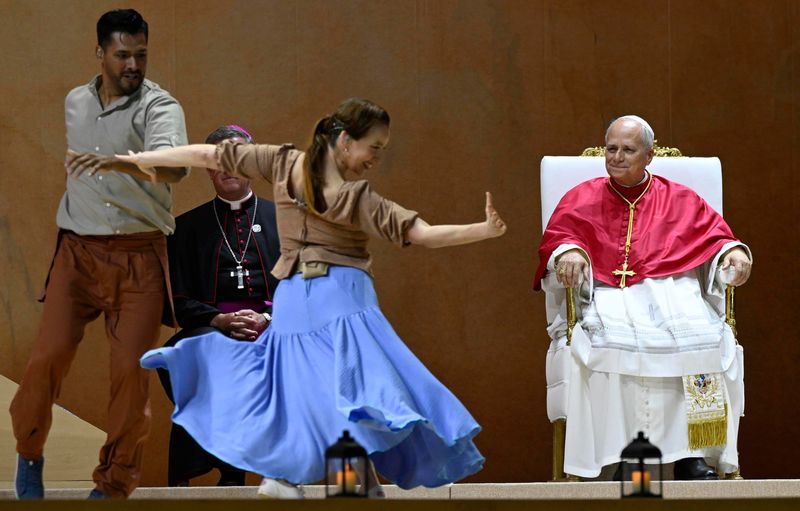
Pope Leo XIV arrived in Lima, Peru, on Wednesday, marking the final stage of his three-nation tour of South America. According to Club of Mozambique, the Pontiff declared Peru his “homeland” upon landing, a sentiment that resonated with the large crowds gathered to greet him. The Vatican estimated that approximately three million people lined the route of his motorcade into the city, waving flags of Peru and the Holy See. The Pope appeared visibly moved as he emerged from his charter plane, smiling as he was greeted by the enthusiastic reception.
During a formal welcome ceremony at the presidential palace, Pope Leo XIV met privately with Peruvian President Keiko Fujimori. He sang the Peruvian national anthem alongside the President and a children’s choir. In his initial remarks, the Chicago-born Pope credited Peruvians with shaping his pastoral identity, noting that the citizenship he acquired in 2015 cemented a bond that had developed over decades. He stated that he was returning to his homeland with deep gratitude, a claim supported by his history as a missionary priest and bishop in the country for more than two decades.
Daily Maverick reported that a 14-meter statue of the Pope was unveiled in Callao, Peru, on 9 November 2026, further illustrating the scale of public anticipation. The visit is considered an emotional highlight of the tour because of the Pope’s long association with the country. As a dual citizen of the United States and Peru, he is the first pope from each nation. Local residents, including former secretary Zuly Castillo, expressed joy at his return, describing the event as a homecoming for the first Peruvian pope.
The visit coincides with significant challenges in Peru, including poverty and political instability. Club of Mozambique noted that 25.7 percent of the population lived in monetary poverty in 2025. The Pope is scheduled to celebrate Mass in various locations, including the Amazon region of Pucallpa and the historic city of Cusco. His speeches are expected to address the future of the Peruvian people, with particular attention to Indigenous communities and economic inequality.