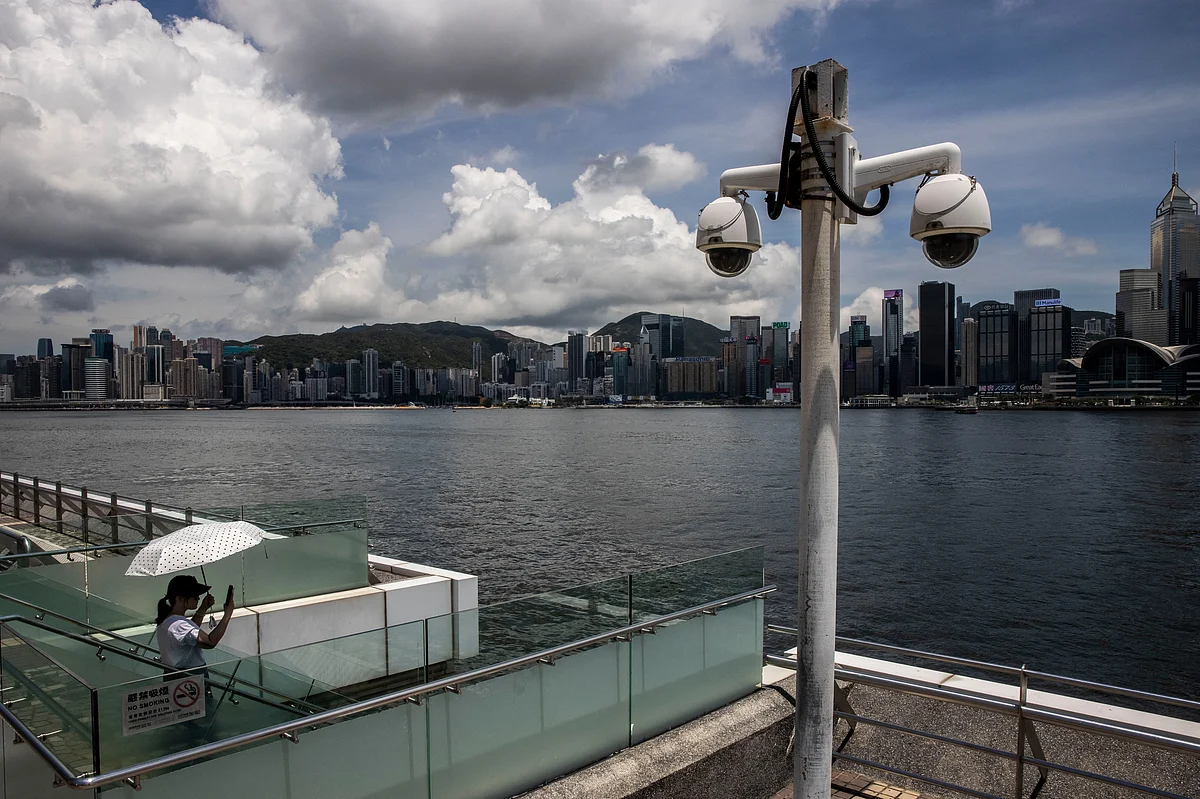
Hong Kong has activated artificial intelligence-powered facial recognition functions across its closed-circuit television (CCTV) surveillance network, a development that significantly expands the monitoring of public spaces. The rollout, which began on Monday, is part of a police operation designated as SmartView. Authorities state the technology is intended to serve as a safeguard for law-abiding citizens while enhancing the capabilities of existing security infrastructure. Police Commissioner Joe Chow announced the expansion over the weekend, framing the upgrade as a necessary evolution in crime prevention and national security measures.
The SmartView program, which launched in 2024, has already seen the installation of approximately 5,000 cameras across the city. According to police data, these systems have contributed to solving nearly 2,200 cases and facilitating more than 2,800 arrests. Security Chief Chris Tang previously informed lawmakers that the AI functions would be utilized to monitor crowds, read license plates, and track criminal suspects. The police force has indicated plans to increase the total number of cameras to 60,000 by 2028, a figure documented in submissions to the legislature.
Public reaction to the expansion has been mixed. Li, a finance worker in his forties who spoke to AFP on condition of anonymity due to safety concerns, expressed apprehension regarding the potential misuse of the technology. He noted that the systems have already collected significant amounts of personal data and facial images, leaving little privacy remaining. Conversely, resident Saturday Zhou told AFP that he was less concerned, observing that similar AI-powered cameras are common in mainland Chinese cities and that residents have adapted to their presence. Zhou added that officials must maintain transparency regarding data usage to preserve public trust.
Commissioner Chow addressed these concerns in local media on Sunday, acknowledging that many people may be worried about the new system. He asserted that the technology would not be abused. The expansion occurs against a backdrop of tightened control in Hong Kong since the 2019 pro-democracy protests, during which Beijing imposed a national security law. Critics argue this legislation has suppressed dissent. Similar AI surveillance technologies have been adopted in mainland China and Britain, drawing criticism from international rights groups over privacy invasions and the risk of wrongful arrests due to false matches. The European Union banned real-time remote biometric identification in public spaces for law enforcement in 2024, with limited exceptions.