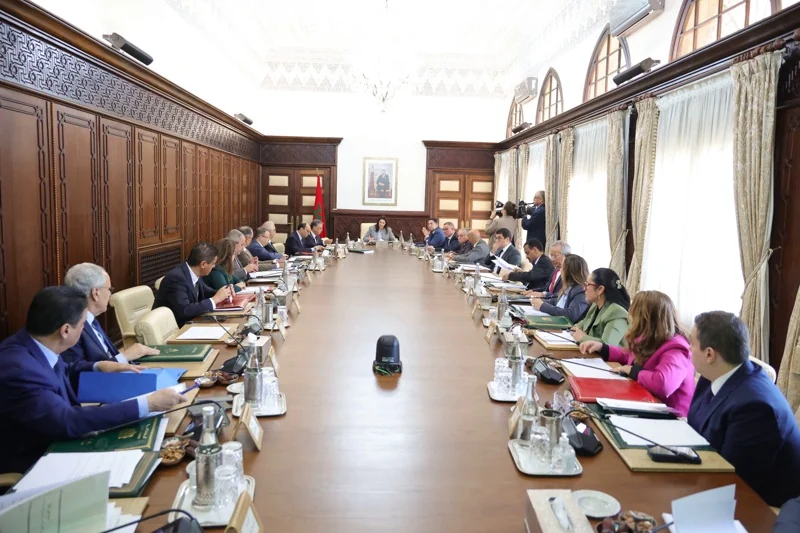
During its weekly session on Thursday, November 19, Morocco’s cabinet approved significant administrative reforms. According to Hespress English, the meeting chaired by Head of Government Fatima Zahra Mansouri also addressed a fisheries pact with Cameroon and several senior appointments. The primary focus remained on modernizing the Ministry of Higher Education, Research and Innovation and adjusting the governance of regional investment hubs.
The interior ministry will now supervise regional investment centers under a new draft decree. This measure aims to enhance coordination between government departments and bolster territorial development programs. The interior minister or a designated representative will chair the boards of directors for these centers, centralizing oversight of regional economic strategy.
Three separate decrees targeted the higher education sector. One measure updates career regulations for university research professors. It clarifies promotion procedures and allows reinstated academics to receive seniority credit for previous assistant professor roles, limited to nine years. Another decree aligns allowances for ministry employees with those in the national education sector, seeking to improve professional conditions and standardize incentive systems across public education branches.
A third decree restructures the ministry’s administrative body. The Directorate of Higher Education and Pedagogical Development will split into two distinct units: one for public institutions and another for private ones. Additionally, the Directorate of Scientific Research and Innovation will be divided to separate research coordination from innovation support. A new directorate for digital transformation and information security will manage infrastructure and cybersecurity.
The cabinet also authorized the ratification of a fisheries cooperation framework with Cameroon, signed in Meknes in April 2026. Finalizing the session, the government approved key appointments under constitutional provisions. Youssef Hassani became secretary-general of the Head of Government’s services. Khalil Belkamel was named director of the Larache-Ouezzane Urban Agency, and Khalil Said was appointed to lead the School of Information Sciences at the High Commission for Planning.