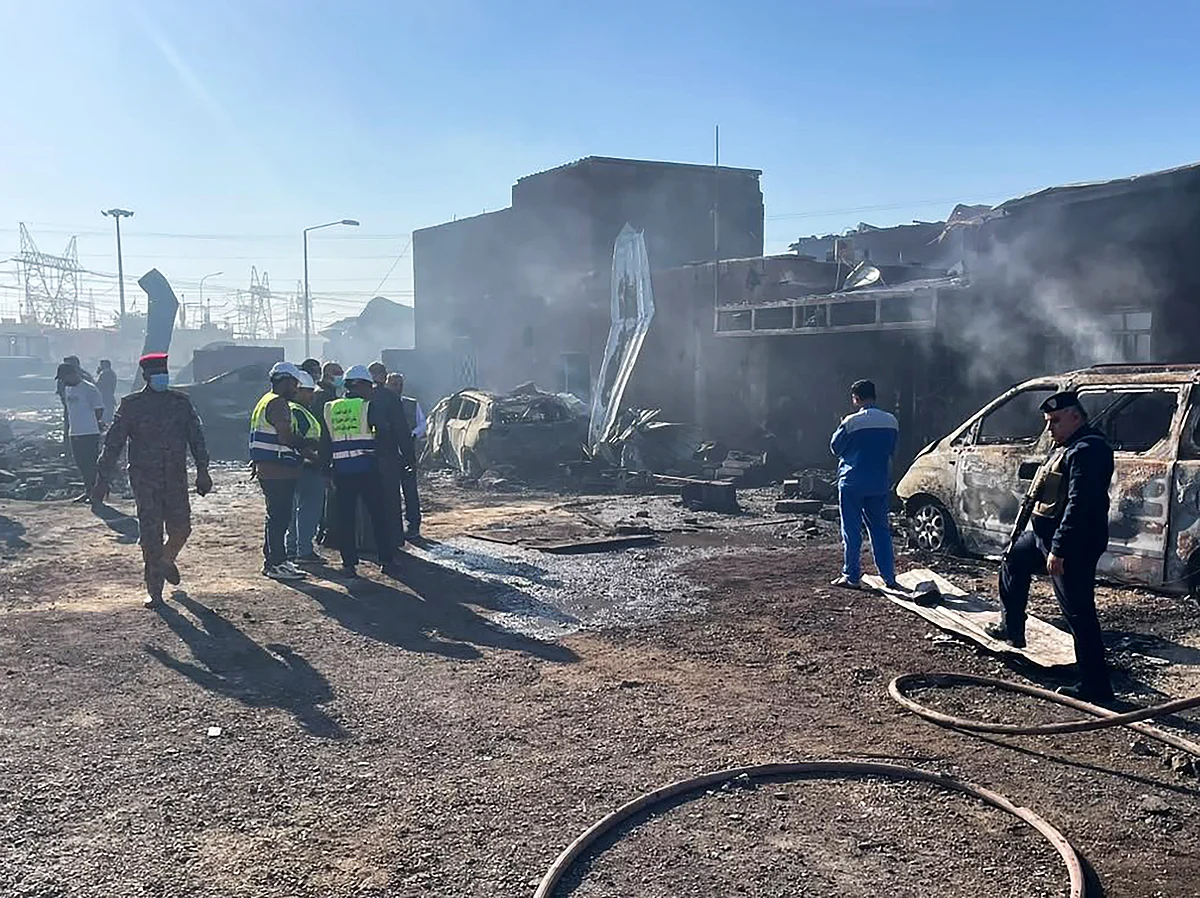
At least four individuals died and 35 sustained injuries during a blaze at the Hartha power station in southern Iraq on Saturday. Civil defense units successfully contained the fire after firefighters responded to the scene located north of Basra. The Iraq Security Media Cell reported that most victims were residents of nearby homes who suffered from smoke inhalation and burns as flames spread from the industrial site to adjacent residences. Asharq Al-Awsat noted the fire broke out at around 6 a.m., marking the start of the emergency.
The Hartha plant, which possesses an installed generating capacity of 800 megawatts, was running at approximately 400 megawatts before the incident forced a complete operational stop. Iraq's Electricity Ministry stated that the event centered on a gas pipeline feeding the facility. Reuters described images from the location showing severely damaged sections of the pipeline, with surrounding ground blackened and debris scattered across the site. Authorities provided no immediate official information regarding the specific cause of the explosion or the full extent of the damage.
Prime Minister Ali al-Zaidi directed an urgent inquiry into the explosion to determine its causes and establish responsibility, his office said. The disaster highlights the fragility of Iraq's electricity infrastructure, which has long struggled with decades of underinvestment and inadequate maintenance. Technical failures at substations have previously disrupted power supplies, particularly during summer months when demand peaks. The shutdown of the Hartha station exacerbates existing shortages in a region already facing frequent blackouts due to grid instability.
The casualty count is expected to rise as rescue teams continue clearing debris and treating the injured. The incident underscores ongoing challenges facing Iraq's energy sector, where operational reliability remains compromised by aging infrastructure. Residents in the Basra area have endured frequent power cuts, a problem worsened by the inability of the grid to meet peak demand during extremely hot weather.