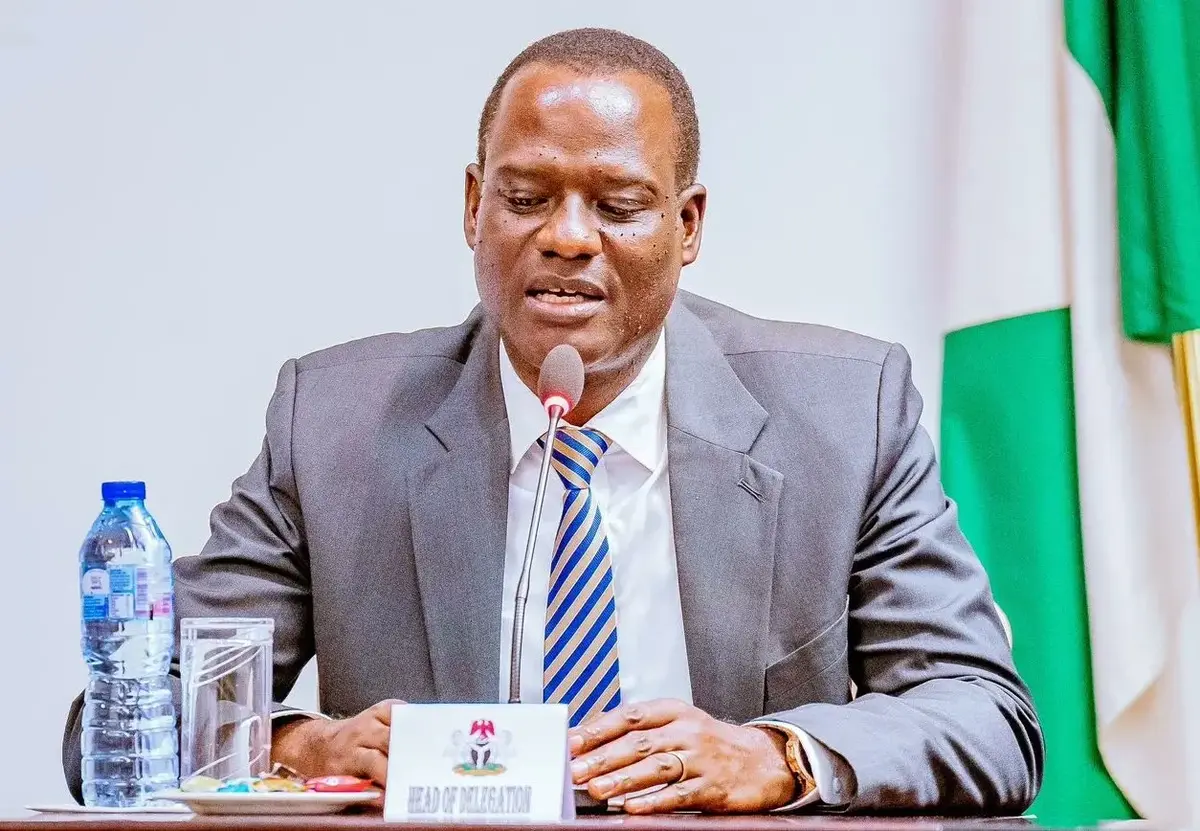
Nigeria’s Federal Government has moved to prevent a reversal of its recent economic reforms, according to Nairametrics. Finance and Coordinating Minister of the Economy Taiwo Oyedele announced on Saturday that the country will not revert to subsidised fuel prices or a dual exchange rate system. This declaration came after Nigeria’s delegation attended the International Monetary Fund and World Bank Group Annual Meetings in Bangkok, Thailand. Oyedele characterised the recent temporary reduction in petrol retail margins by the national oil company as a short-term commercial measure to assist consumers, distinct from a long-term public subsidy.
The minister presented several data points to justify the government’s stance on monetary policy. He noted that economic output expanded by 4.4 percent during the second quarter of 2026. Inflation rates have dropped for four straight months, falling to less than half the peak recorded roughly two years prior. Nairametrics reported that foreign reserves now exceed $35 billion, while the tax-to-GDP ratio has climbed to 12.5 percent from around 7 percent three years ago. Additionally, private capital inflows have surged dramatically, rising from approximately $300 million in 2023 to close to $6 billion in the current year.
Oyedele described the national debt as manageable at 36 percent of GDP, with the government prioritising cheaper, longer-term borrowing structures. Internationally, he stated that the World Bank Group has pledged backing for power and infrastructure via guarantee mechanisms. The IMF has promised ongoing technical assistance for fiscal policy and statistical transparency, while the European Union has focused on energy and domestic pharmaceutical production under its Global Gateway framework. The minister warned that these international pledges represent collaborative intent rather than immediate cash injections, emphasising a strategy of building credibility over public visibility.
During the meetings, Nigeria leveraged its chairmanship of the Group of 24 to push for global financial system changes, such as more transparent credit ratings and accessible climate finance. The government has also launched 65 new investment projects under the Project Nigeria programme, with a combined value of $78.5 billion. These initiatives span energy, transport, and other key sectors, each backed by feasibility studies to attract private investment from both local and foreign entities. According to Nairametrics, interest from Asian and European investors has already been registered for these developments.