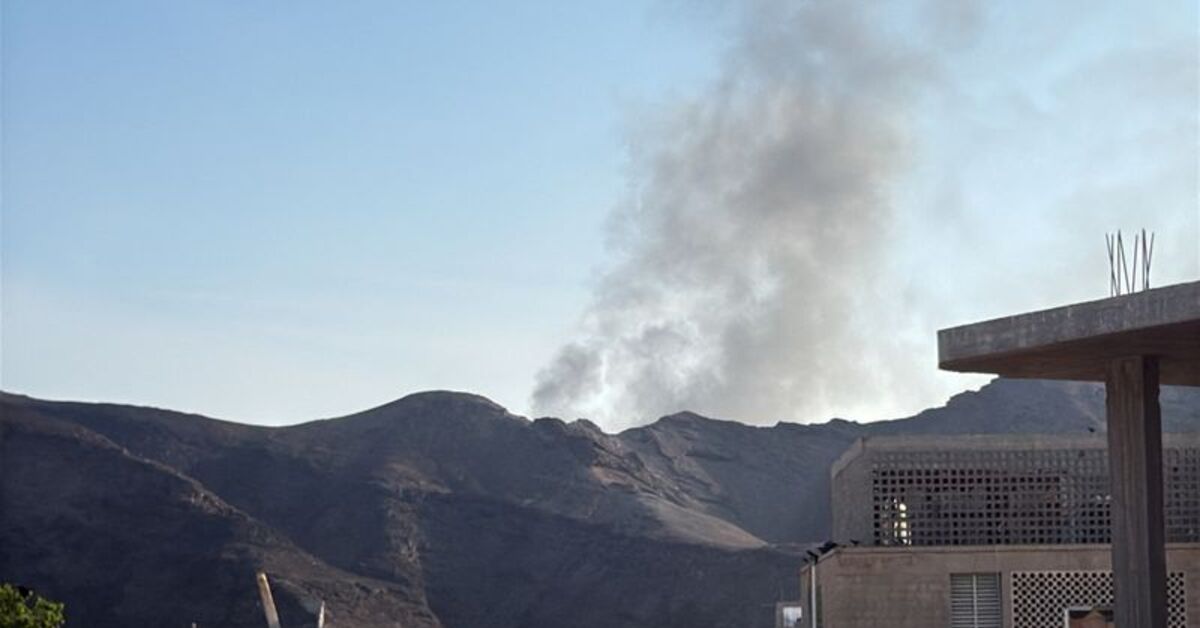
Yemen’s Houthi rebels have advanced significantly against the internationally backed government in recent days, raising concerns that they may launch an offensive against Aden, the country's temporary capital. According to Al-Monitor, these developments mark a sharp escalation in a civil war that had been largely frozen since a 2022 truce. The renewed fighting has reignited hostilities initially sparked by the broader US-Iran conflict, allowing the Tehran-aligned group to make substantial territorial gains. The Houthis have now secured control of the Bab el-Mandeb Strait, a critical chokepoint for global energy and trade, while simultaneously placing the third-largest city, Taiz, under siege.
The strategic implications of these military moves are profound. Houthi drone and missile strikes on Saudi Arabia, combined with their targeting of vessels in the Bab el-Mandeb, have placed Riyadh in a difficult position. These actions have contributed to rising oil prices, which were already under pressure due to disruptions in the Strait of Hormuz. This dynamic bolsters Iran’s position in its wider geopolitical struggle with the United States. The conflict has also exacerbated a severe humanitarian disaster in Yemen, the poorest Arab state, displacing hundreds of thousands of civilians and worsening an already dire situation.
The roots of the current violence trace back to the 2011 Arab Spring protests, which fractured the Yemeni army and led to the downfall of President Ali Abdullah Saleh. The Houthis, a revival movement of the Zaydi school of Shi'ite Islam, took advantage of the ensuing instability to advance southward. In 2014, they entered the capital, Sanaa, with the complicity of Saleh, before forcing President Abd-Rabbu Mansour Hadi to resign and flee to Aden. A Saudi-led coalition subsequently launched an air campaign to restore Hadi, leading to years of deadlock that only ended with the 2022 truce.
Since the truce collapsed this summer, the Houthis have demonstrated increased military capability, aided by advisers from Hezbollah and Iran’s Revolutionary Guards. Their arsenal now includes sophisticated locally assembled drones and missiles capable of pinpointing distant targets. In contrast, the internationally recognized government remains fragmented. Divisions exist between pro-government forces in the north, aligned with the Islah party, and southern factions comprising separatists and Salafis. A violent split between Saudi Arabia and the United Arab Emirates last December has further weakened the anti-Houthi coalition, leaving the government struggling to mount an effective defense against the advancing rebels.