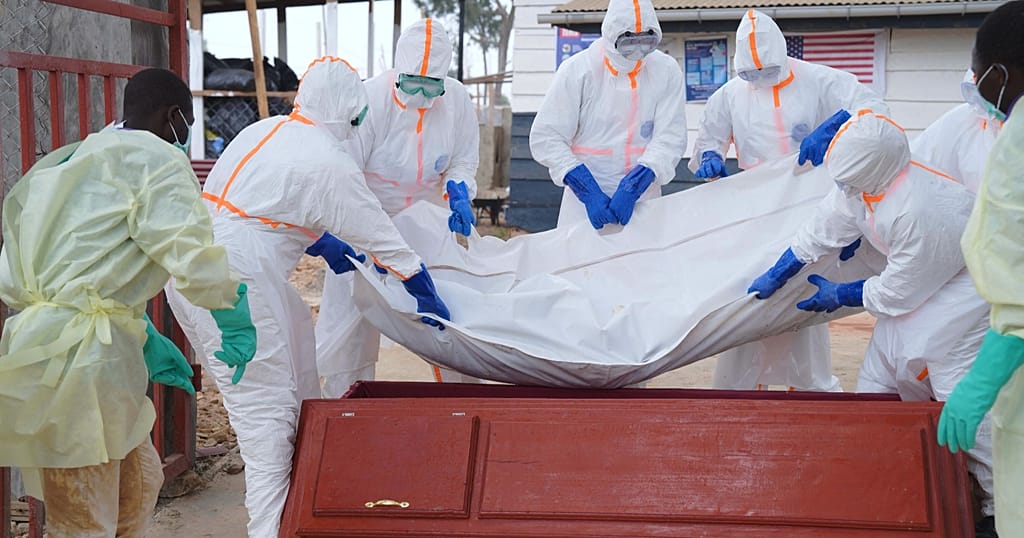
Dignified and Safe Burial teams in the eastern Democratic Republic of Congo are working to retrieve the bodies of Ebola victims while navigating significant health risks and deep-seated community prejudice. According to Africanews, Chimène Mwanaki, a member of one such team in Kokola near Beni, highlighted the social stigma faced by responders. She noted that community members often falsely accuse women in the response of spreading the virus or endangering their families, claiming that these workers are blamed for contaminating their husbands or becoming unmarriageable. Mwanaki stated that these accusations are baseless, as the teams are actively fighting to break the chain of transmission.
The outbreak, declared in mid-May, has become the deadliest in the DRC's history. Government data reported by Africanews indicates that more than 11,000 cases have been recorded, with nearly half of those infected dying from the disease. This death toll is on track to surpass the 11,000 fatalities from the West African outbreak between 2014 and 2016. The virus has spread rapidly, moving at a pace aid groups have likened to wildfire, and has now reached eight of the country’s 26 provinces. By the time the outbreak was officially announced, 43 deaths had already been recorded, suggesting the virus circulated undetected for an extended period.
To manage the crisis, the Dignified and Safe Burial programme has established Community Teams for Dignified and Safe Burial, known as ECUMAIR, in areas where central teams are not present. Jean Manina, a supervisor for these teams in the Oicha health zone, explained that they monitor local teams daily to ensure protocols are followed. He stated that if an alert comes from a health zone with an ECUMAIR team, he visits to verify that work is being carried out correctly to prevent infections among team members when they remove protective gear. In areas without these local teams, a mobile team based in the area is deployed instead.
Beyond health risks, these teams face hostility from communities who falsely accuse them of mutilating bodies to take samples for testing. Manina also reported that team members face prejudice within their own neighborhoods, with neighbors accusing them of profiting from the crisis or making it easier for Westerners to kill citizens. Despite these challenges, the teams continue their work to contain the outbreak, which continues to stretch an already strained healthcare system across the region.