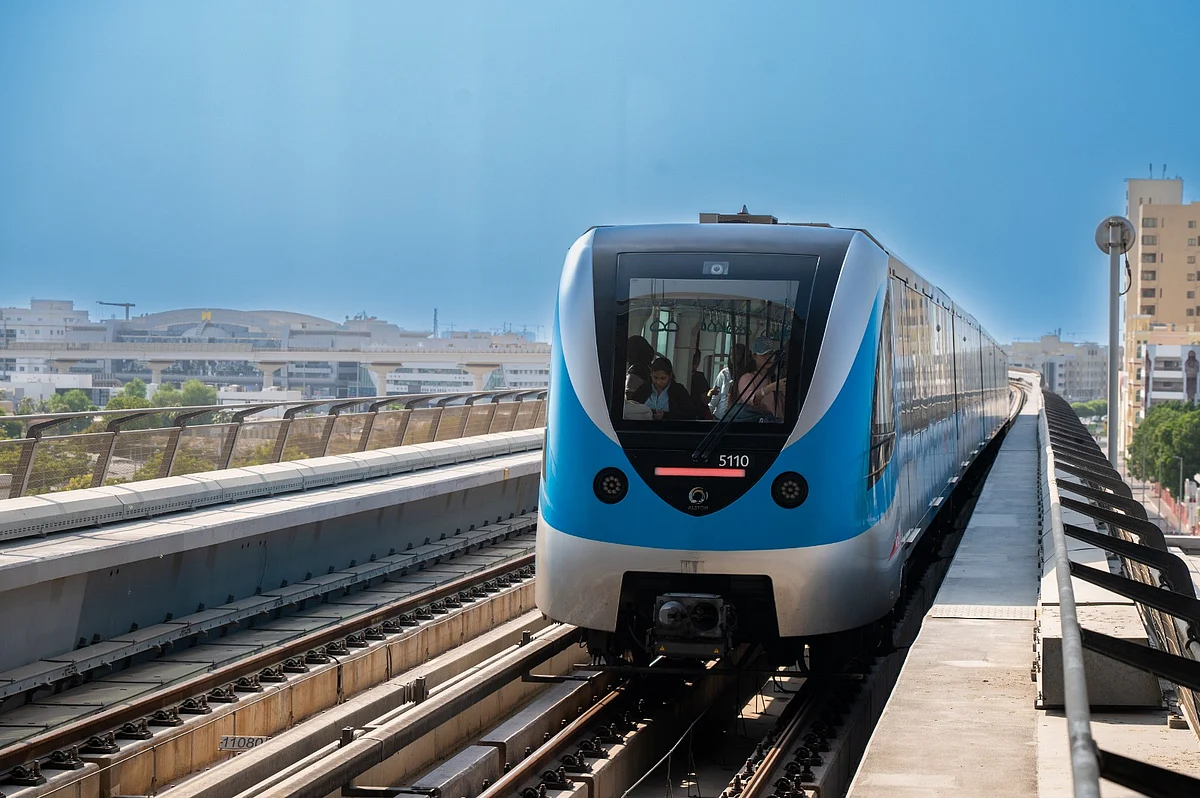
The Roads and Transport Authority (RTA) in Dubai has launched a research initiative to capture energy from the vibrations generated by the Dubai Metro’s rail infrastructure. In collaboration with Amity University Dubai, the project seeks to develop a system that converts these mechanical movements into electricity. According to Khaleej Times, the primary objective is to power autonomous monitoring equipment located within Metro corridors, rather than supplying energy to the trains. The initiative was highlighted during Dubai Future Week as part of the authority’s future transport roadmap.
The technical focus of the study is a desert-resilient piezoelectric system. Piezoelectric materials generate an electric charge in response to applied mechanical stress, such as the constant vibrations from passing trains. The RTA representative told Khaleej Times that the project would specifically utilize these vibrations to generate electricity. This approach allows for the creation of self-sustaining monitoring nodes that do not require external power sources or frequent battery replacements, enhancing the efficiency of infrastructure maintenance in the harsh desert climate.
This project is a component of the RTA’s Research, Development and Innovation Strategy 2030, which was launched in October 2025. The strategy is built on four pillars: safety, future seamless mobility technologies, sustainability, and operational excellence. The Metro vibration project aligns with the sustainability and operational excellence goals by reducing the energy footprint of monitoring systems and improving the reliability of infrastructure data collection.
During the same exhibition, the RTA displayed other innovative transport concepts. One exhibit featured a roadside wind-energy device called Vertaxis Clean Energy, designed to capture wind from passing vehicles to power traffic lights or feed into the grid. Another display focused on battery-swap stations for electric delivery motorcycles in partnership with Terra, aimed at reducing emissions and improving operational efficiency for riders. No specific rollout dates or station numbers were provided for the battery-swap initiative.
The RTA’s university collaborations extend beyond energy generation. Projects with the American University of Ras Al Khaimah and New York University Abu Dhabi are investigating pavement-cooling systems and solar cooling technologies to mitigate urban heat. Additionally, research with Khalifa University and NYU Abu Dhabi is examining shaded routes to Metro stations, while University of Wollongong in Dubai is exploring bio-luminescent road markings. A separate Khalifa University study is developing tools for wireless charging systems for public buses.