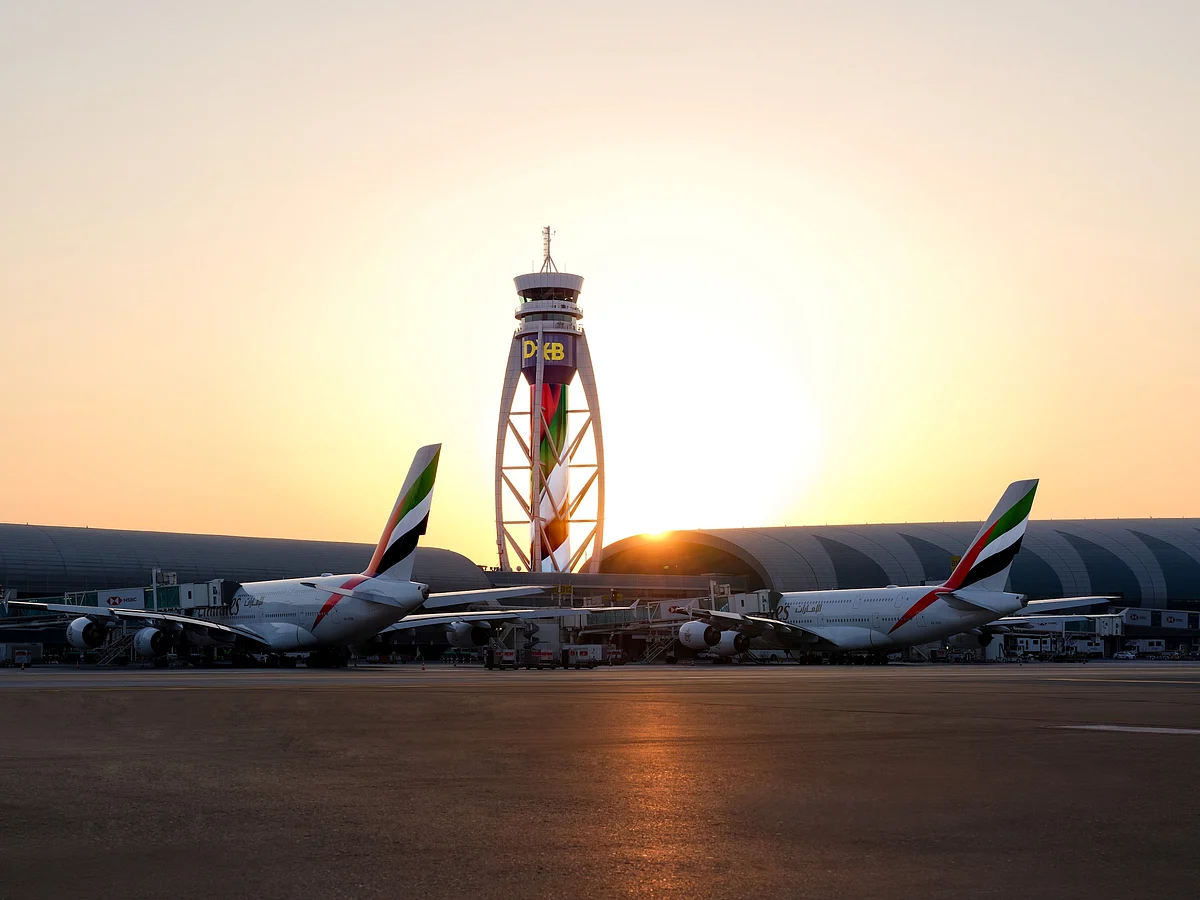
Dubai International Airport (DXB) processed 50.4 million passengers during the first nine months of 2026, marking a 28.1 percent year-on-year decline, according to Khaleej Times. The airport operator attributed the sharp reduction in traffic to disruptions caused by the regional military conflict affecting the Gulf. While the hub continues to rebuild, figures represent a contraction from the 95.2 million passengers handled in 2025.
The third quarter saw 18.8 million passengers, with August as the busiest month at 6.6 million. The rate of contraction slowed compared to the first half, where traffic fell by 31.3 percent. Khaleej Times reported that the airport is now served by 57 airlines connecting to 235 destinations across 101 countries, an increase from nearly 50 international carriers at the end of the first half.
India remained the largest country market for DXB in the third quarter, contributing 2.6 million passengers. This was followed by Saudi Arabia with 1.4 million and the United Kingdom with 1.3 million. Other significant markets included Pakistan with 800,000 passengers, the United States with 640,000, and Germany with 480,000. London led city destinations with 784,000 passengers, ahead of Mumbai and New Delhi.
Paul Griffiths, chief executive of Dubai Airports, told Khaleej Times that the operator expects to welcome more than 70 million guests this year. He emphasized that recovery is gathering pace, noting capacity is approximately 83 percent restored. Griffiths stated there are absolutely no barriers to reaching full capacity, with Emirates Airlines already operating at levels in the 90s, very close to previous year's figures.
Griffiths described the regional conflict as sufficiently remote to Dubai to stand by traffic forecasts. He expressed optimism about a hockey stick recovery, arguing the airport was prepared unlike peers who retired aircraft during the pandemic. He added that innovation is central to their approach, aiming to simplify processes and remove bottlenecks to unlock additional capacity without expanding the airport's physical footprint.
Operational metrics for the third quarter showed an average load factor of 74 percent, three percentage points lower than the same period last year. Aircraft movements totaled 243,000, down 27.6 percent, while cargo volume reached 1.215 million tonnes, a 23.2 percent decrease. Security and processing times remained efficient, with 99.9 percent of passengers waiting under 10 minutes at departure passport control.