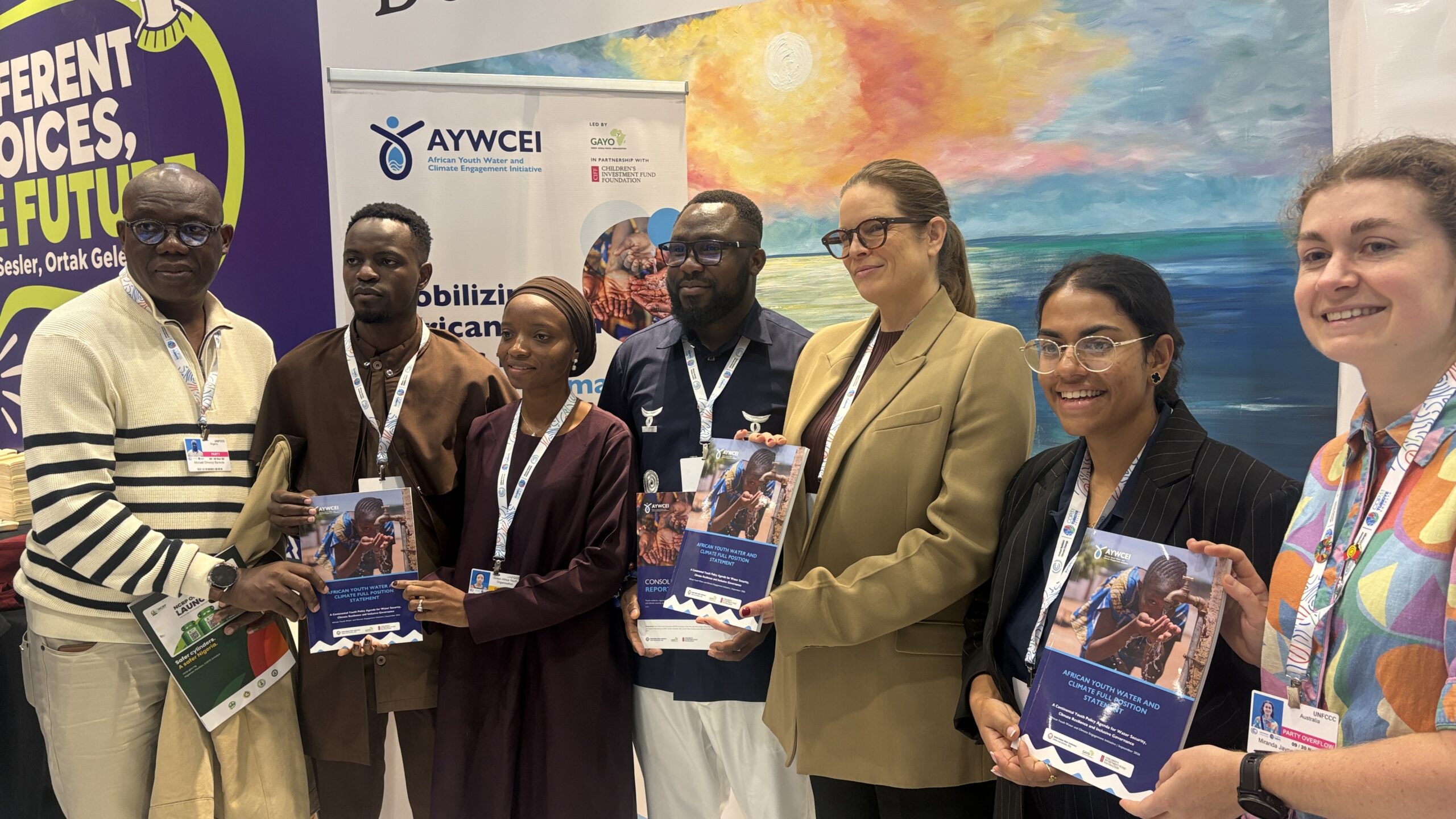
The Green Africa Youth Organisation (GAYO), partnering with the Children’s Investment Fund Foundation (CIFF), launched the African Youth Water and Climate Engagement Initiative to document young people’s experiences of water insecurity. According to Premium Times, the initiative has reached 51 African countries, engaging more than 1,200 youth in a preliminary survey and over 900 others in regional consultations. Baliqees Salaudeen-Ibrahim, GAYO’s Climate Director, told Premium Times the research aimed to understand how water challenges affect youth and identify solutions they are already developing. She noted that consultations reinforced survey concerns and highlighted community-based initiatives led by young people.
The initiative seeks to move beyond participation by ensuring youth findings influence policy. Salaudeen-Ibrahim explained the research was prepared ahead of COP31 so recommendations could reach conference leadership. She stated that governments must help develop and implement solutions, adding that collaboration with public authorities could help youth navigate administrative barriers and hold officials accountable. The findings will be presented at the UN Water Conference in Abu Dhabi in December, an event aimed at accelerating progress toward Sustainable Development Goal 6.
Data cited by Premium Times illustrates the challenge. The 2025 WHO/UNICEF Joint Monitoring Programme report found only 32 percent of sub-Saharan Africans had access to safely managed drinking water in 2024. In Nigeria, the 2024 Demographic and Health Survey revealed that while 71 percent had access to basic services, only 38 percent of households had water on their premises. Kate Hampton, CEO of CIFF, told Premium Times the foundation aims to show how young people drive solutions rather than just discussing them. She added that the foundation hopes to expand these opportunities at the next climate conference in Ethiopia.
Government responses vary. In Lagos State, Bankole Michael, Director of Climate Change and Environmental Planning at the Ministry of Environment and Water Resources, told Premium Times the state is rehabilitating waterworks and partnering with organizations like WaterAid. He acknowledged that population pressures and vandalism remain challenges but stated the state is working to improve access. However, Michael did not provide specific figures on the amount committed to these projects or the number of residents expected to benefit. This lack of detail makes it difficult to assess the scale of interventions or how quickly they might improve reliable water access.