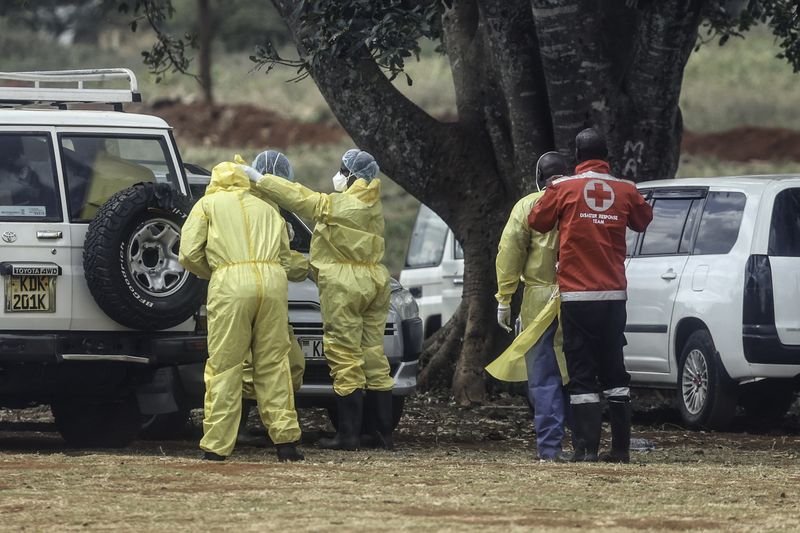
Government data released on Tuesday indicate that the Democratic Republic of Congo has reached 11,042 confirmed Ebola infections, with 5,387 fatalities. According to Daily Maverick, citing Reuters, the epidemic stems from the Bundibugyo virus strain, which lacks approved vaccines or treatments. This makes it the second-most severe outbreak in history, following the 2014-2016 West African crisis. MyJoyOnline confirmed these figures, noting that eight of the nation’s 26 provinces are now impacted, with significant mortality occurring outside clinical facilities.
The International Organization for Migration (IOM) emphasized the importance of monitoring population mobility in a report published by AllAfrica. Dr. Andrew Mbala, IOM's Regional Ebola Coordinator, stated that 71 confirmed cases have been detected along transit routes since the outbreak began in mid-May. He noted that 95 percent of these cases were identified on informal paths that bypass official checkpoints. IOM maps gathering points such as markets and bus stations to identify mobility corridors, a strategy that helps responders allocate staff and resources effectively. The agency has conducted 55 million screenings across the DRC and 11 neighboring countries, intercepting 258 bodies transported by individuals who often use these informal paths.
According to AllAfrica, the World Health Organization reported more than 10,400 cases and 5,103 deaths as of October 31, slightly lower than the latest government figures. IOM is currently supporting surveillance at 57 displacement sites, 50 of which are in health zones affected by the outbreak. The agency requires $110 million for regional operations through March 2027 but faces a funding gap of nearly $60 million. Daily Maverick noted that slow detection, conflict, and weak health systems have accelerated the virus's spread, with the disease now reported across East, Central, and West Africa.
In Ituri Province, UN peacekeepers evacuated three civilians injured in a skirmish near the Plaine Savo-Gali road on Sunday. AllAfrica reported that the three individuals were transported from Bethlehem to Fataki Hospital accompanied by a Médecins Sans Frontières nurse, arriving safely for further care. This evacuation is part of the mission's broader effort to protect civilians and facilitate urgent medical treatment in areas affected by insecurity.