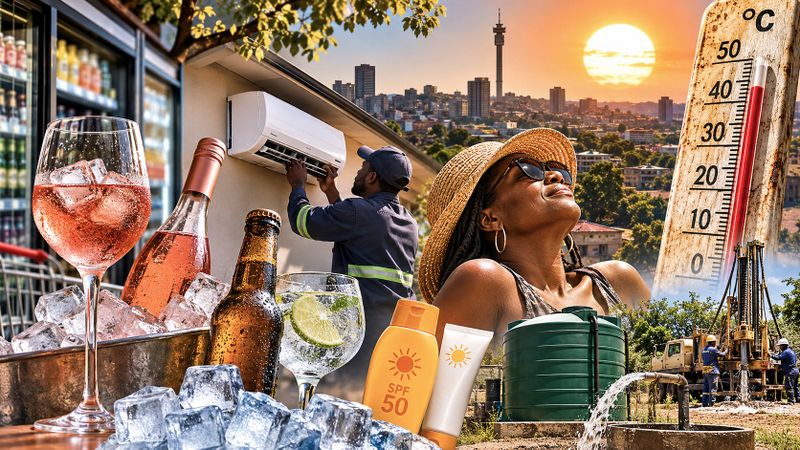
A changing climate is fundamentally altering consumer behavior in South Africa, with rising temperatures directly influencing purchasing trends. According to a report by Daily Maverick, the combination of long-term warming and an impending El Niño event is creating a distinct shift in what South Africans buy during the summer months. The publication argues that retailers must integrate these environmental factors into their business models and financial forecasts to remain accurate in their projections.
Johannesburg has experienced significant warming over the past three decades. Data from the Climate-Zone website indicates that the city warmed by 0.74°C per decade between 1995 and 2024, resulting in a cumulative rise of 2.2°C. The City of Johannesburg’s Climate Action Plan, released in 2021, noted that average daytime temperatures have increased nearly 1.5°C since 1981, while night-time temperatures have risen by almost 1°C compared to forty years prior. These local figures exceed the 1.5°C threshold established by the 2015 Paris Agreement, a global benchmark that was breached worldwide for the first time in 2024.
This thermal shift is visibly impacting daily life and consumption habits. The author of the Daily Maverick piece notes a personal transition from red wine to rosé with ice during summer months, a change attributed directly to the heat. Additionally, the installation of air conditioning units, previously considered an extravagance in the city’s high-altitude climate, is becoming a necessity for many households. The report highlights that air conditioning sales and installations are expected to surge, alongside increased demand for ice, white wine, gin and tonic, beer, and non-alcoholic cool drinks. Sunblock sales are also projected to remain brisk.
Water consumption is anticipated to soar, potentially leading to stricter municipal water restrictions in major metros like Cape Town and Johannesburg, similar to those already imposed in Cape Town. This demand may boost the business of borehole installers. However, the report cautions that South African consumers are financially constrained. Consequently, spending on items like air conditioning and beverages may reduce expenditure on other sectors, such as red wine sales or gambling. The publication concludes that these climate-driven trends will likely become evident in upcoming retail results and Statistics South Africa’s monthly inflation figures.