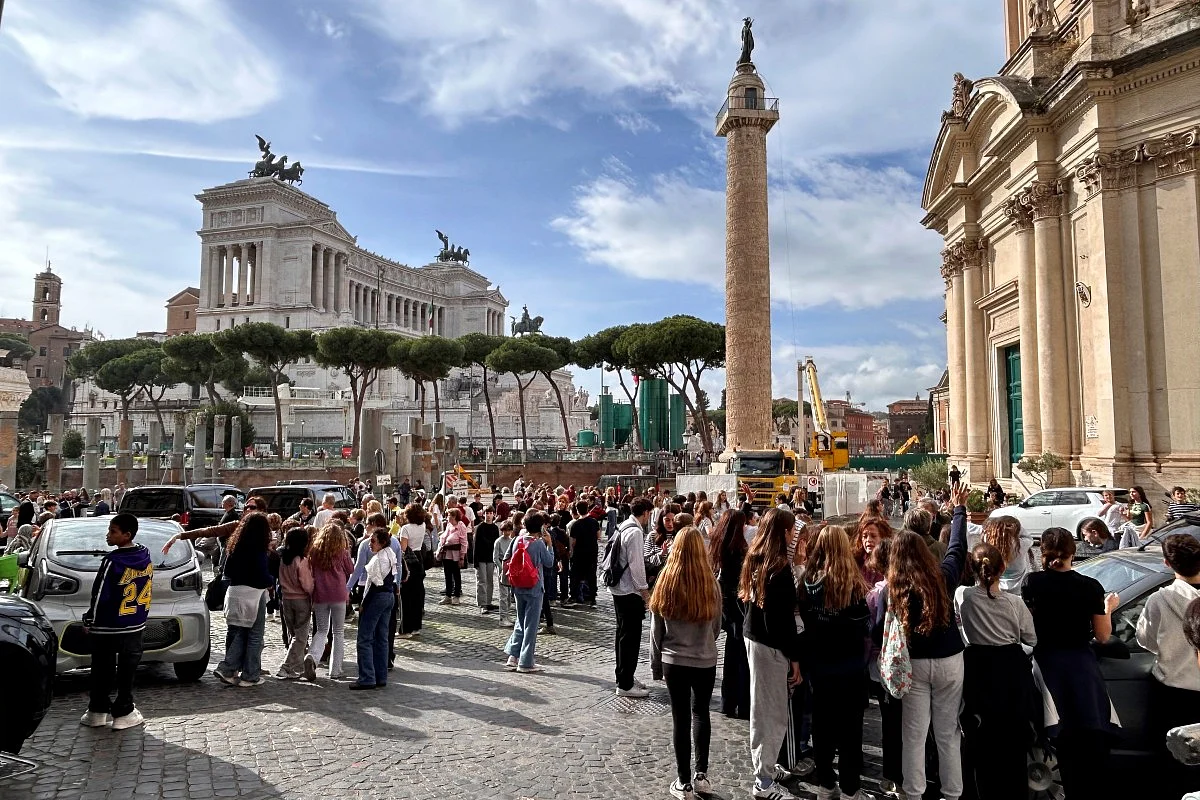
Schools across Italy were evacuated on Wednesday after approximately 6,300 institutions received emailed bomb warnings, according to Reuters and the Italian Education Ministry. The disruption prompted parents in cities such as Rome and Milan to collect their children, with some students left waiting in courtyards for police checks. Italian media reported that the threats were sent to schools in Rome, Naples, Florence, and other major cities, with around 300 to 312 schools specifically identified as receiving the alerts by various officials.
The email, signed by a purported leader named "Mikhail Andropov" of the "Vilayat of Misoginistan," threatened a powerful explosive left in a plastic bag. A version of the message reviewed by Reuters contained a separate warning aimed at Prime Minister Giorgia Meloni. Meloni convened a meeting with security and intelligence chiefs, stating on Facebook that initial checks had not revealed a "concrete danger." She characterized the reports as a deliberate tactic to create alarm, a view shared by Education Minister Giuseppe Valditara, who described the incidents as a likely cyber-attack rather than a genuine risk.
Parallel email threats reached educational institutions in Scotland, Northern Ireland, and the Republic of Ireland. Authorities in these regions treated the alerts as hoaxes, and classes were largely uninterrupted, according to Khaleej Times and Al-Monitor. The same supposed sender claimed responsibility for threats sent to newsrooms in Ireland and Bulgaria earlier in the week. Antonello Giannelli, head of the ANP school heads association, noted that the episode demonstrated how modern communication tools could cause large-scale disruption when combined with irresponsibility.
The latest alerts follow a series of disruptions across Europe, including cyberattacks on supermarket refrigeration systems and blood banks, as well as previous bomb hoaxes on flights. Certain European officials suspect Moscow may be orchestrating the campaign to disrupt nations supporting Ukraine, a theory Russia has denied. A national security source told Reuters that because school emails are public, dispatching the alerts was as simple as drinking a glass of water. Italian Foreign Minister Antonio Tajani also noted that he was being targeted by cyber criminals sharing his personal data, linking the broader trend to hybrid warfare tactics.