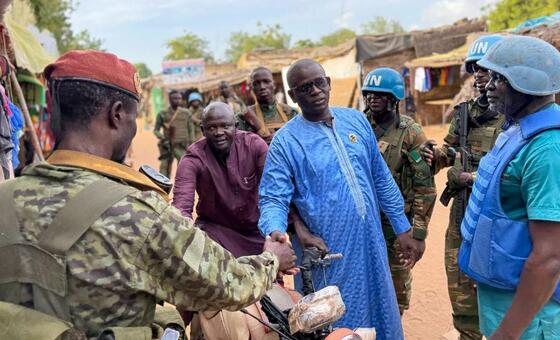
Valentine Rugwabiza, the UN chief in the Central African Republic, cautioned the Security Council on Tuesday against pulling out MINUSCA peacekeepers too soon. She argued that the ongoing war in Sudan is destabilizing the eastern border regions, threatening the progress made in recent years. According to UN News, the mission’s quick reaction force proved vital during a June 30 assault on Am-Dafock, which displaced 17,000 residents and wounded six international troops. Rugwabiza stated that without this support, local authorities might have struggled to reclaim control after armed groups briefly occupied the town before fleeing into Sudan.
Africanews reported that while 1,907 combatants have been disarmed since mid-2025 and municipal councils are being installed, instability persists in many areas. The UN chief noted that new local officials require significant support from development partners to function effectively. In the southeast, suspected Lord’s Resistance Army units caused 26 major incidents between June and September, including the capture of 68 civilians, roughly 40 of whom were children. The Azandé Ani Kpi Gbé militia also remains active, though three hostages held since late 2025 were freed on Monday after local mediation.
AllAfrica highlighted that 31 per cent of the population, or nearly two million people, suffered severe food shortages from April to August. The UN’s humanitarian funding stood at just 46.6 per cent in early October. The Security Council must vote on the mission’s future by mid-November. MINUSCA currently deploys over 12,000 personnel and has already shut down several bases in calmer zones, handing those tasks to domestic forces. The UN Secretary-General suggests a one-year renewal to maintain the ability to respond quickly to cross-border threats.
Council members are split on the issue, with Washington favoring deeper cuts while others fear a rushed exit. Rugwabiza emphasized that keeping sufficient troop levels is critical during this consolidation period. She noted that security has not worsened in areas where bases closed, but the strategy depends on long-distance patrols and stronger national armies. The UN chief asked the Council to ensure the force remains robust enough to secure the country’s recent achievements.