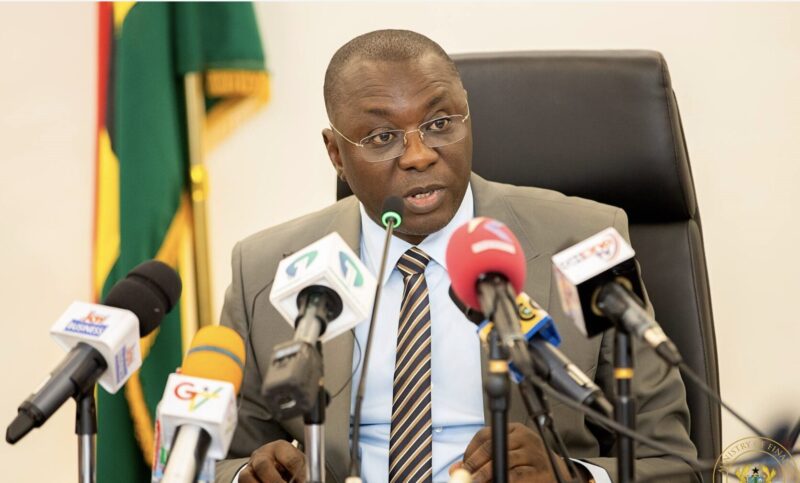
Dr Mohammed Amin Adam, the former finance minister and current ranking member of Parliament’s Finance Committee, has publicly challenged the Ghanaian government’s implementation of the Big Push infrastructure programme. Speaking during the parliamentary debate on the 2027 Budget, Adam demanded a detailed explanation for the limited progress of several major projects despite significant budgetary allocations. He argued that the current performance record raises serious concerns regarding the administration's ability to translate infrastructure spending commitments into completed physical assets.
According to MyJoyOnline, Adam’s scrutiny was based on data from the mid-year budget review. He stated that as of June 2026, many Big Push projects had recorded little or no verifiable progress. The figures presented by the former minister indicated that only 13 projects had reached at least 50 per cent completion. Additionally, 15 projects were reported to be between 25 and 50 per cent complete. The remaining projects lacked any clear status report, leaving their progress entirely unverified.
Adam highlighted that 59 per cent of the projects had not been accounted for in the official scorecard. He described this lack of transparency as disappointing, particularly given the government's emphasis on the Big Push initiative as a primary driver of national infrastructure development. The former minister questioned how the allocated resources had been utilized over the past two years, asking directly where the money had gone. He insisted that the government must provide greater accountability for the resources committed to the initiative.
The statements were made in the context of the parliamentary debate on the 2027 Budget. Adam used the mid-year review data to argue that the government needed to provide clear information on the implementation status of the projects. He emphasized that the current scorecard does not tell a good story, implying that the pace of work is insufficient to justify the financial outlay. The former finance minister’s intervention adds pressure on the executive to justify its infrastructure spending and explain the discrepancies in project completion rates.
MyJoyOnline reported that Adam’s demands for accountability are part of a broader critique of the government’s infrastructure strategy. The publication noted that the former minister’s questions highlight the gap between political rhetoric and on-the-ground reality. By focusing on the unaccounted projects, Adam has shifted the focus from total expenditure to effective utilization. The debate continues as parliamentarians examine the budgetary allocations and their corresponding outcomes.